Sargassum, a floating brown seaweed, usually reaches Tulum's beaches between April and October, heaviest from June to August. 2026 was a heavy year: it arrived early and Tulum was still rated Moderate, swimming not recommended, on 19 October. The cenotes are inland fresh water and unaffected, so they are the best fallback.
Sargassum, a brown seaweed that floats in huge mats across the Atlantic, usually reaches Tulum’s beaches between April and October, with the heaviest landings from June to August. In 2026 it came early and stayed late: on 19 October 2026 a tracker still rated Tulum Moderate, with swimming not recommended. The months from November to March are usually the clearest. If the beach is brown on your dates, swim in the cenotes instead: they are inland fresh water, and the seaweed cannot reach them.
How bad was sargassum in Tulum in 2026?
Heavy, and early. Riviera Maya News reported on 27 January 2026 that Tulum had already collected 185 tonnes of seaweed that year, which it called an early and constant arrival. Mexico’s navy (SEMAR) said it had collected 123,000 tonnes in Quintana Roo by mid-October 2026, against 92,000 tonnes in the whole of 2025, according to UnoTV on 14 October 2026. Other reports give 2025 a higher total, so we do not call either year a record.
The University of South Florida’s Sargassum Watch, a satellite-based monthly outlook, called 2026 the second-largest year after 2025 in its July bulletin. It expected amounts to keep falling until about November. Its 31 August bulletin found totals falling in every region but still above the 75th percentile of past years, which means more beaching than usual.
Tulum sargassum conditions in October 2026
| Date |
Source |
What it said |
| 5 and 12 October 2026 |
HowIsTheSargassum weekly report |
Tulum Moderate |
| 14 October 2026 |
UnoTV, citing SEMAR |
New landing in Tulum; several points on red and orange alert |
| 19 October 2026 |
HowIsTheSargassum weekly report |
Moderate, Light to Moderate by beach; swimming not recommended |
| October 2026 |
Tulum’s beach department (ZOFEMAT), as reported |
Water off Playa Paraíso had cleared; more than 5,600 t collected in Tulum in 2026 |
The tracker and the town disagree, which is normal: conditions change by beach and by day. HowIsTheSargassum is a commercial site that says it uses USF satellite images, beach cameras and local reports. Use it, or Quintana Roo’s colour-coded alerts, on the morning you plan a beach day.
When is the best time to avoid sargassum?
November to March, most years. That lines up with the dry season, when Tulum’s weather is also at its best (see best time to visit Tulum). But the season has no fixed edges. The 2026 landings began in January and were still going in late October, so a winter trip is a better bet, not a guarantee.
Our month guides track what to expect in December, January, February and March.
What sargassum is like on the beach
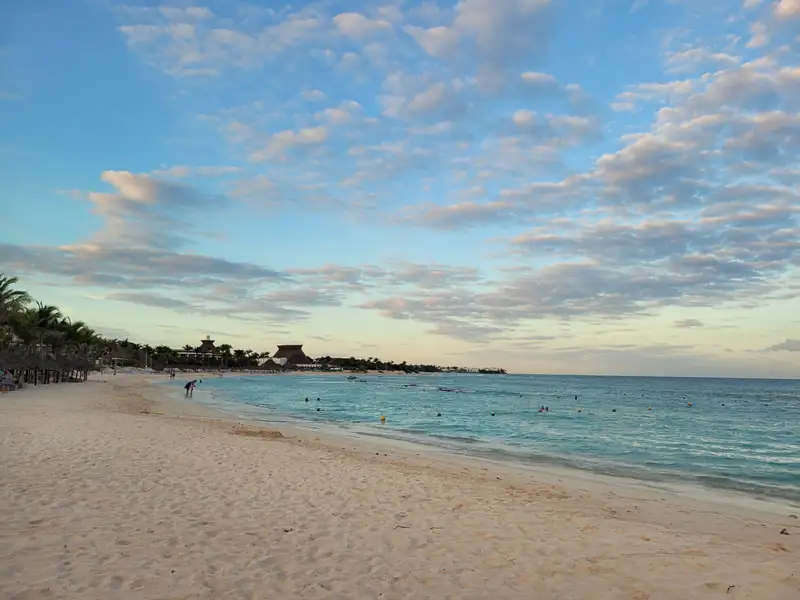
Floating mats turn the water brown near the shore and pile up on the sand. Once a pile has been on land for about 48 hours it starts to release hydrogen sulphide and ammonia, according to the US Environmental Protection Agency; hydrogen sulphide is the rotten-egg smell. The EPA says breathing these gases can worsen asthma and other breathing problems, so people with those conditions should keep away from rotting piles. In Tulum, the municipal beach department (ZOFEMAT) clears the public beaches, while hotels, the navy and the federal parks agency clear their own stretches.
If you are booking a beach hotel in the Hotel Zone between April and October, check a tracker a week before you go and again the day before. Our Tulum beaches guide lists the public access points.
The fallback: swim in the cenotes
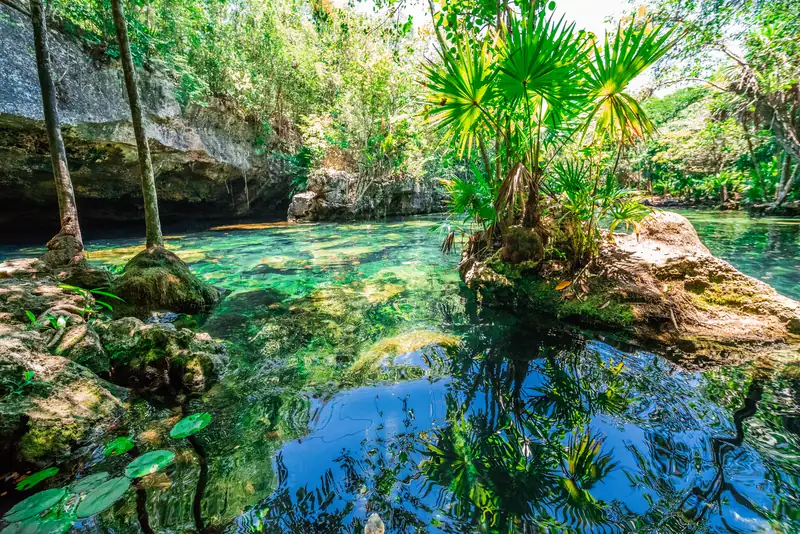
This is where Tulum has an advantage over most Caribbean resorts. The cenotes are pools of fresh groundwater in the limestone, inland or set back from the sea, so they are clear whatever is happening on the beach. Water temperature is about 24 to 25°C all year.
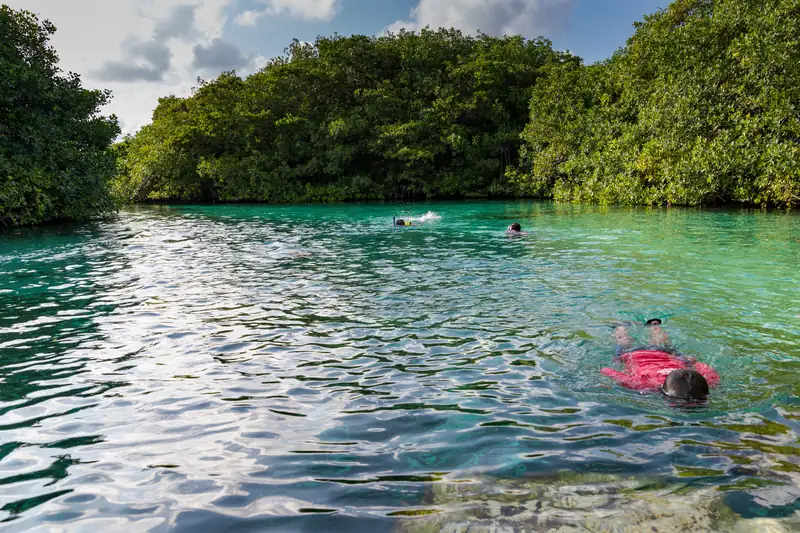
Casa Cenote is the exception to check. It is a mangrove channel connected underground to the sea, and we found no report on whether sargassum reaches it.
A sargassum week is also a good moment to go inland: the Cobá ruins and the Cobá cenotes are about an hour away, and a Sian Ka’an canal float takes place on inland lagoons and canals. Our Tulum cenote map groups every cenote by road, and cenote entrance fees lists what each one charges.
Sargassum by month: what to expect
| Months |
Usual pattern |
2026 |
| November to March |
Usually the clearest months |
185 t collected in Tulum by 27 January |
| April and May |
Season usually begins |
|
| June to August |
Usually the heaviest landings |
|
| September and October |
Landings continue |
Moderate in Tulum on 19 October; new landing on 14 October |
The pattern is a guide, not a forecast. The University of South Florida publishes a monthly outlook for the whole Atlantic belt, and HowIsTheSargassum posts weekly reports for Tulum and other Riviera Maya beaches. Quintana Roo uses a colour-coded alert, with red and orange marking excessive seaweed, which local press reports when beaches change.
Where to check before you go
- A week before: read the latest USF outlook and a weekly tracker report for Tulum.
- The day before a beach day: check the tracker again, or ask your hotel what the beach looks like that morning.
- On the day: look at the water. If it is brown near the shore or piles are rotting on the sand, switch to a cenote.
Booking around the seaweed
- Pick a base near the cenotes, not on the beach, if you travel between April and October. Tulum town or Highway 307 work best.
- Keep beach days flexible. Book the cenotes and the ruins for the mornings and decide on the beach the day before.
- Book refundable if your trip falls in the usual season and the beach is the reason for it.
Cenote tours on our tours page run in any sargassum conditions.