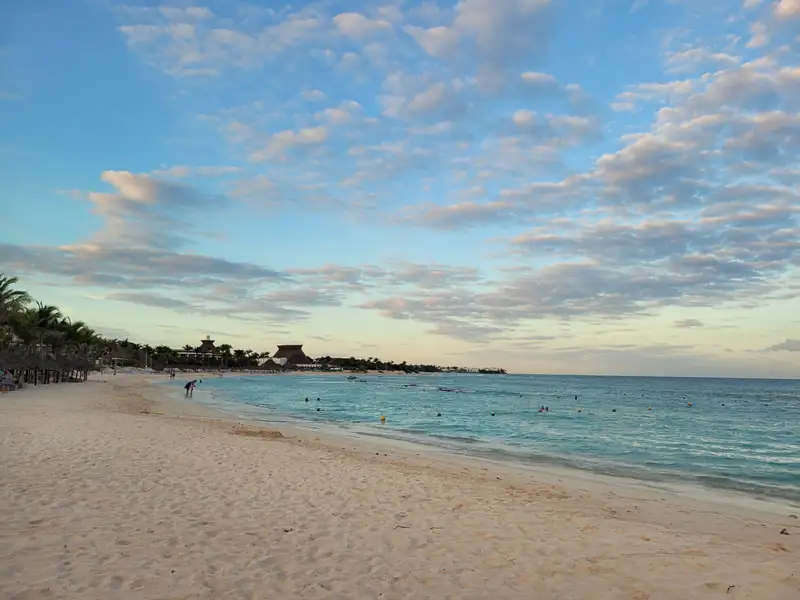
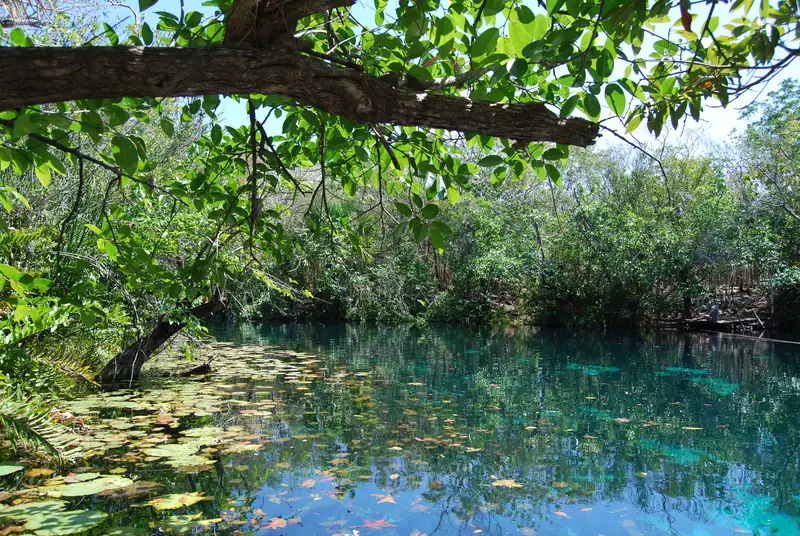
The best time to visit Tulum is December to April, the dry season, with daily highs of 29 to 31°C and the least rain; March is the driest month. Avoid late August to October if you can: it is the wettest stretch and the peak of hurricane season. Cenotes stay about 24 to 25°C all year.
The best time to visit Tulum is December to April. That is the dry season: daily highs of 29 to 31°C, 33 to 60 mm of rain a month, and the sea at 26 to 27°C. March is the driest month. The time to avoid, if you can, is late August to October, when rain peaks and hurricane season is at its height. Sargassum seaweed usually hits the beaches between April and October. The cenotes are the constant: fresh water at about 24 to 25°C all year, untouched by seaweed.
Weather figures below are the official 1991 to 2020 normals for the Tulum station of CONAGUA’s national weather service (SMN), as republished by Climate-Zone. Sea temperatures come from WeatherSpark’s model-based averages.
Tulum weather month by month
| Month |
Avg high |
Avg low |
Rain |
Sea |
What to expect |
| January |
29°C |
18°C |
60 mm |
27°C |
Coolest nights; busy to 6 January |
| February |
30°C |
19°C |
42 mm |
26°C |
Dry; coolest sea |
| March |
30°C |
21°C |
33 mm |
27°C |
Driest month; Easter crowds in 2027 |
| April |
31°C |
21°C |
40 mm |
27°C |
Dry and hot; sargassum season can begin |
| May |
31°C |
22°C |
90 mm |
28°C |
Rains start late in the month |
| June |
31°C |
23°C |
150 mm |
29°C |
Hurricane season opens; sargassum often heavy |
| July |
32°C |
22°C |
98 mm |
29°C |
Hottest month; sargassum often heavy |
| August |
31°C |
22°C |
91 mm |
29°C |
Hurricane peak begins mid-month |
| September |
31°C |
22°C |
177 mm |
29°C |
Hurricane peak around 10 September |
| October |
31°C |
21°C |
204 mm |
29°C |
Wettest month |
| November |
30°C |
20°C |
92 mm |
28°C |
Dry season returns; season ends 30 Nov |
| December |
29°C |
19°C |
42 mm |
27°C |
Dry; holiday peak from 21 December |
Sources disagree on the details. WeatherSpark’s model makes September the wettest month (159 mm) and May the hottest; the SMN station record makes October wettest and July hottest. We use the station record.
Dry season: December to April
This is when Tulum is at its most comfortable. WeatherSpark’s cool season, with average highs below 29°C, runs from 13 November to 9 February, and it rates late November to mid-March the best period for general outdoor activity.
It is also high season. Tulum’s hotels were 83.5% full in the week from 27 December 2025 to 2 January 2026, according to Quintana Roo’s tourism department. Expect the highest room prices at Christmas, New Year and Easter, and queues at Gran Cenote from the 8:00 opening. Mexico’s school holidays matter too: the 2026 to 2027 winter break starts on 21 December, and the Easter break runs from 22 March to 2 April 2027.
Wet season: May to November
The rains start around late May. WeatherSpark dates the wetter season from 25 May to 2 November. June brings a first peak (150 mm), then July and August are a little drier before September and October, the wettest months. November is a transition: 92 mm on average, falling as the month goes on.
Hurricanes and seaweed make this the riskier half of the year:
- Hurricanes. The Atlantic season runs from 1 June to 30 November. NOAA’s National Hurricane Center puts the peak around 10 September, with most activity from mid-August to mid-October. If you travel then, follow the National Hurricane Center forecasts.
- Sargassum. The brown seaweed usually reaches the Mexican Caribbean between April and October, heaviest from June to August. In 2026 it arrived early: Tulum had collected 185 tonnes by late January, and on 19 October a tracker still rated Tulum’s beaches Moderate. See Tulum sargassum.
The upside is space. Fewer visitors and easier hotel bookings. If you come for the cenotes rather than the beach, the wet season matters less than you might think: the water is the same 24 to 25°C, and the cenotes are fresh water, unaffected by seaweed.
Best time for cenotes
Any time of year. Cenote water stays about 24 to 25°C, cooler than the sea, so a swim feels best in the hot months. What changes is light and crowds. Cenotes open around 8:00 or 9:00 and close at 17:00 or 18:00. Arrive at opening, or after about 14:30 at Gran Cenote, to avoid tour groups.
Our guides to Gran Cenote, Dos Ojos and cenote swimming cover timing at each site.
Best time for the beach
February and March, before the sargassum season usually starts in April. The sea is 26 to 27°C and the rain is at its lowest. In any month, check a sargassum tracker before you book a beach hotel, and keep a few cenotes in reserve.
Holidays and events to plan around
| Dates |
What happens |
| 12 December |
Feast of the Virgin of Guadalupe |
| 21 December 2026 to 6 January 2027 |
Mexican school winter holidays, Christmas, New Year |
| 31 December 2026 to 10 January 2027 |
Zamna Tulum festival season; Day Zero on 9 January 2027 |
| 30 January to 1 February 2027 |
Constitution Day long weekend |
| Late February |
Tulum’s carnival (26 February to 1 March in 2026; 2027 dates not yet announced) |
| 13 to 15 March 2027 |
Benito Juárez long weekend |
| 21 March to early April 2027 |
Holy Week and the school Easter break (22 March to 2 April) |
Best time for the ruins and Cobá
The cooler months, December to February, are the easiest for sightseeing on foot. The Tulum ruins open from 8:00 to 17:00 with last entry at 15:30, and foreign visitors pay 265 MXN in total since July 2026 (100 MXN for Parque del Jaguar plus 165 MXN for the ruins and national park). The Cobá ruins open from 8:00 to 17:00, last entry 16:00. In any month, arriving at opening gives you the coolest hours of the day.
When to avoid Tulum
- Late August to October: wettest weather and peak hurricane season.
- June to August, if you are coming only for the beach: the heaviest sargassum months.
- Christmas to early January and Easter week, if you dislike crowds and high prices. In 2027 Easter Sunday is 28 March.
Month guides
Our month pages cover the four most popular months in detail: weather, holidays and events, sargassum and cenote tips for December, January, February and March. For where to base yourself, see where to stay in Tulum, and for trips that save you the planning, our tours page.