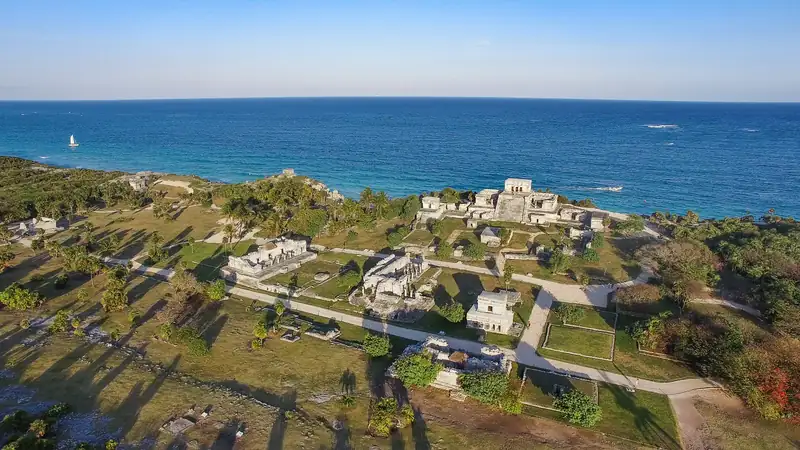
Cobá is a Maya city in the jungle 47 km west of Tulum, about 45 minutes by car on Highway 109. INAH opens it daily from 8:00 to 17:00, last entry 16:00, and charges foreign visitors MXN 210. The 42 m Nohoch Mul pyramid reopened for climbing on 7 December 2025 with a wooden staircase.
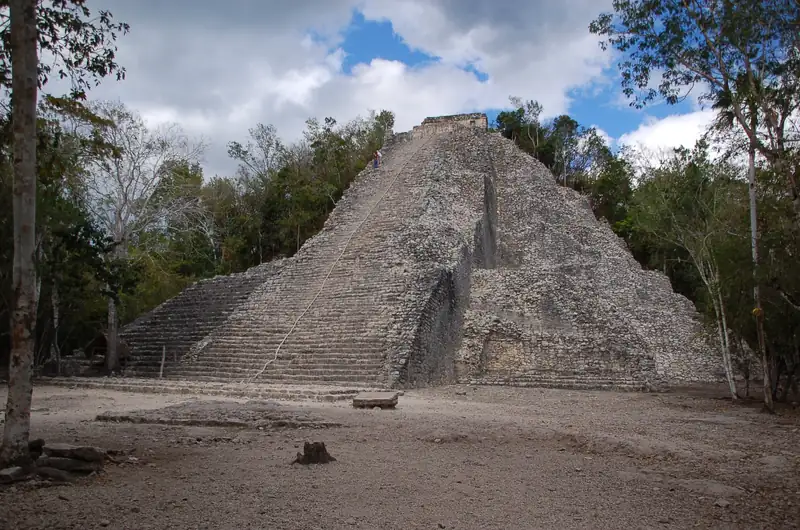
The Cobá ruins are the remains of a large Maya city in the jungle, 47 km west of Tulum on Highway 109. INAH, Mexico’s national institute of anthropology and history, opens the site every day from 8:00 to 17:00, with last entry at 16:00. Foreign visitors pay MXN 210 and Mexicans MXN 105 (checked October 2026). The big news is Nohoch Mul: after six years closed, the 42 m pyramid reopened for climbing on 7 December 2025.
Cobá is in the municipality of Tulum, so it makes an easy half day from town. It pairs well with a swim, either at the three cave cenotes just outside Cobá village or at the cenotes you pass on the drive.
Cobá entrance fee and hours in 2026
|
Detail |
| Hours |
Monday to Sunday, 8:00 to 17:00, last entry 16:00 |
| Foreign visitors |
MXN 210 |
| Mexican visitors |
MXN 105 |
| Sundays |
Free for Mexicans and foreign residents of Mexico |
| Exempt |
Children under 13, over-60s, students, teachers and people with disabilities, with ID |
| Not allowed |
Food, smoking, pets |
Checked October 2026. Hours and fees from INAH’s own Cobá page; exemptions and the Sunday rule from Riviera Maya News, January 2026.
The fee doubled at the start of 2026. Riviera Maya News reported a new rate of MXN 209, up from about MXN 104 in 2025, and INAH’s page now shows MXN 210. Guides that still quote MXN 90 or 100 are out of date.
INAH’s ticket is not always the only charge. The Cobá ejido (the local landholding community) has collected its own fee at times since 2021, and a guide updated in October 2026 lists a community fee and a parking charge on top of INAH’s. Neither amount is published by INAH, so bring cash pesos and expect to pay at the car park as well as the gate.
Climbing Nohoch Mul
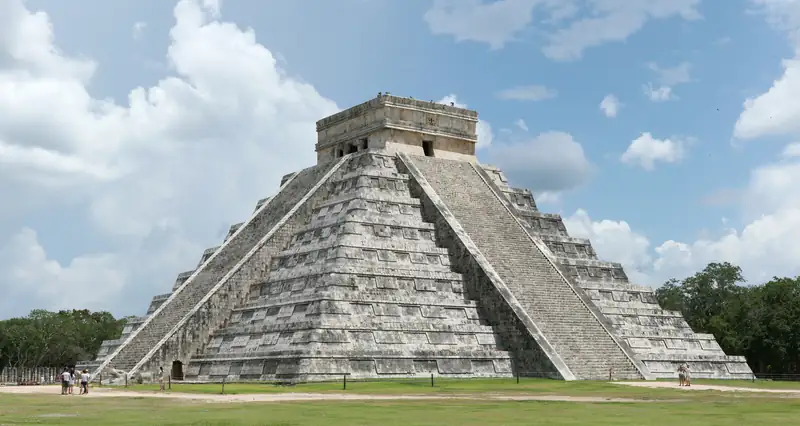
Nohoch Mul means “great mound” in Yucatec Maya. At 42 m it is the tallest building in the north of the Maya area, according to INAH. For years it was the reason people came to Cobá: unlike El Castillo at Chichén Itzá, you could climb it.
That ended in 2019, when INAH stopped the climb because heavy foot traffic had worn down the original steps. On Sunday 7 December 2025 Mexico’s culture secretary opened a new wooden staircase built over the old stairs. It is 2 m wide, split into two 1 m lanes, one for going up and one for coming down. Ejidatarios from Noh Bec, a Quintana Roo community known for building with tropical hardwoods, made it.
How the climb works now, from press reports and a guide updated in October 2026:
- Groups of up to 15 go up at a time.
- Each group gets about 15 minutes at the top.
- Climbing runs from opening until mid-afternoon and stops in rain or strong wind.
The staircase covers about 120 original steps, so it is still a steep, sweaty climb in the heat. Wear shoes with grip and take water. INAH says the top gives wide views over the Maya forest.
Some 2026 blog posts still say climbing is banned. They were written before December 2025.
Bikes, pedal taxis and getting around the site
Cobá is big. INAH says the city covered about 70 square kilometres at its height, between 200 and 600 AD, with around 50,000 inhabitants. The excavated groups visitors see are spread along jungle paths, and Nohoch Mul is close to 2 km from the entrance.
You have three ways to cover it:
- Walk. Shaded paths link every group. Allow more time and more water.
- Rent a bike at the entrance. This is the usual choice: flat paths, a breeze, and you can stop where you like.
- Hire a pedal taxi (triciclo), pedalled by someone from the local community. Good for anyone who can’t cycle or walk long distances.
INAH doesn’t publish bike or pedal-taxi prices. A guide updated in October 2026 quotes MXN 80 to 100 for a bike and MXN 150 to 200 for a pedal taxi for two. Treat those as a rough guide and pay cash.
What you’ll see at Cobá
The path from the entrance passes La Iglesia, a stepped temple, then a ball court, before reaching the Nohoch Mul group. Off to the side, the Macanxoc group has carved stelae, though the stone is badly worn.
The most unusual thing about Cobá is its roads. México Desconocido, citing INAH, counts more than 50 sacbés, raised roads of white limestone built between about 600 and 800 AD. Some joined groups inside the city. Sacbé 1 ran about 100 km west to Yaxuná, near Chichén Itzá. You walk along stretches of these roads inside the site.
Recent epigraphy has also fixed the city’s founding date: 12 May 569 AD, according to INAH’s director at the December 2025 reopening. He added that Cobá traded with Chichén Itzá, Ichkabal, Tikal and cities on the Caribbean coast.
Tulum to Cobá
By car. Drive west out of Tulum town on Highway 109, the Cobá road, toward Nuevo Xcán. It is about 47 km. A routing engine gives 45 minutes; allow an hour with speed bumps and turning traffic. The same road passes Gran Cenote, Cenote Calavera, Zacil-Ha and Car Wash, so a swim on the way home is easy.
By colectivo or bus. Shared vans and some ADO buses run from Tulum town to Cobá. We couldn’t confirm a current timetable or fare from an official source, so ask at the ADO station or the colectivo stop the day before. The getting around Tulum guide covers colectivos and taxis.
By tour. Every Cobá tour in our list pairs it with something else: the Tulum ruins, Chichén Itzá, or Punta Laguna and a cenote. See the list below and our tours page.
Arrive at 8:00 if you can. You beat the midday heat, and the first groups up Nohoch Mul wait the least.
Cobá cenotes and other stops nearby
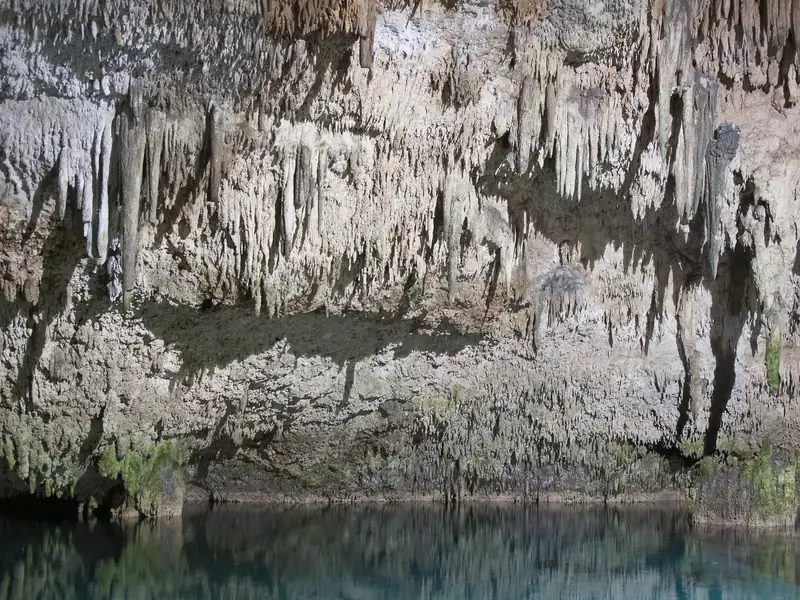
Three cave cenotes sit 3 to 4 km from the ruins: Choo-Ha, Tankach-Ha and Multun-Ha. You walk down stairs into each one, and they are quieter than the cenotes near Tulum. The Cobá cenotes guide has directions and what each one is like.
If you want to stay over and reach the ruins at opening time, Kaab Cobá (the former Villas Arqueológicas) is about a 13-minute walk from the entrance. The where to stay in Tulum guide compares it with staying in town.
Cobá also sits on the inland road to Valladolid and Chichén Itzá. Cobá to Chichén Itzá is about 115 km, so some coach tours do both in one long day.
Tips for visiting Cobá
- Bring cash pesos for parking, the community fee and bike hire.
- Take insect repellent. The site is in forest, and the lagoons are close.
- INAH doesn’t allow food inside the site, so eat before or after.
- Cobá is in Quintana Roo, on Tulum time. Chichén Itzá and Valladolid are in Yucatán, one hour behind.
- For more around Tulum, see things to do in Tulum and the Tulum ruins guide. For cenotes, start at the Tulum cenotes homepage.