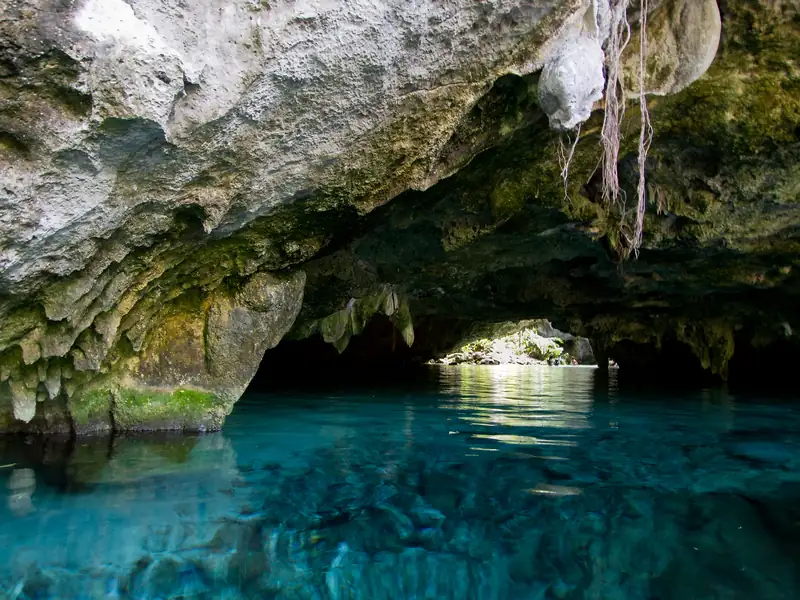
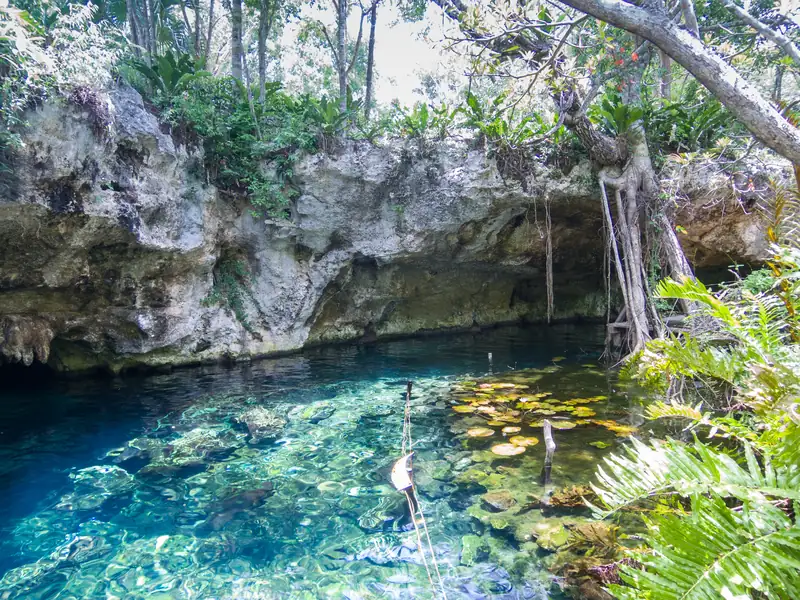
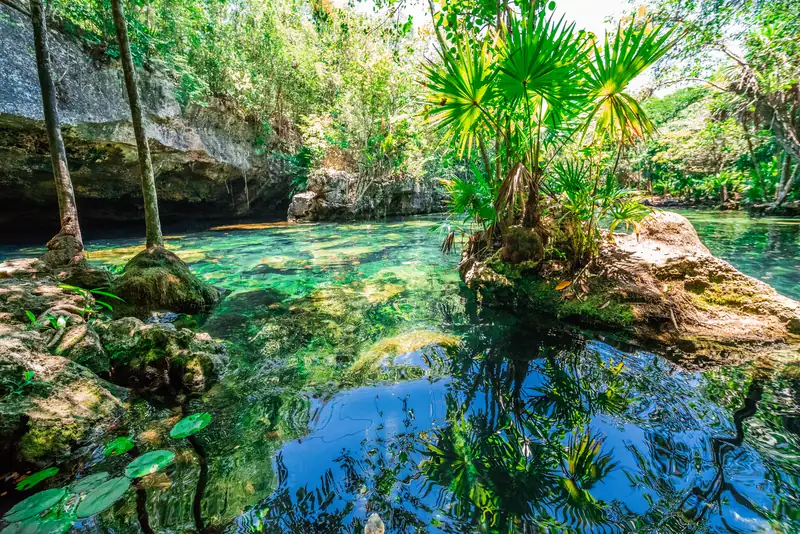
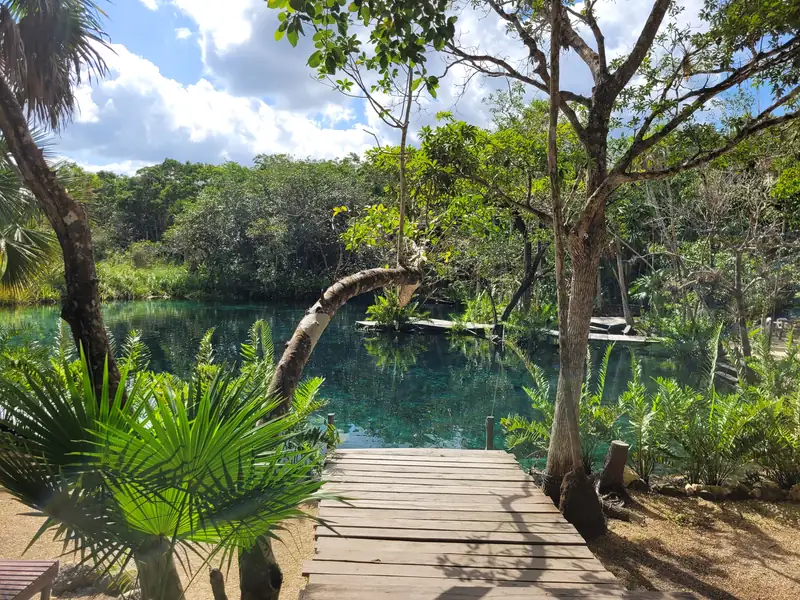
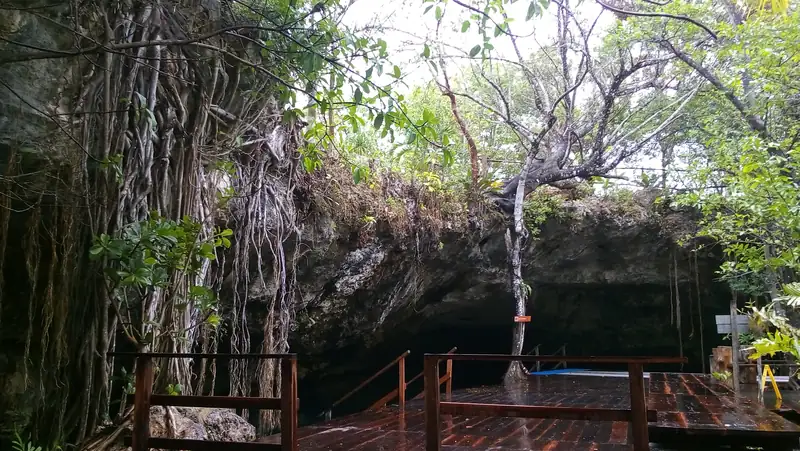
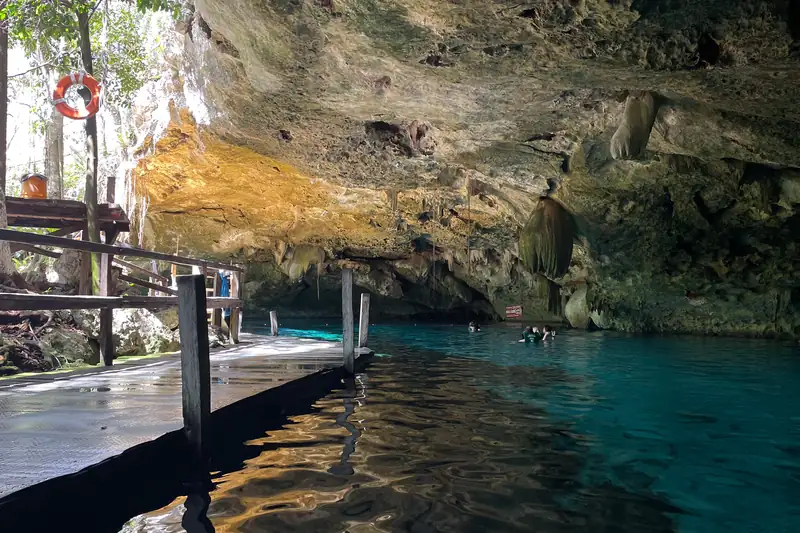
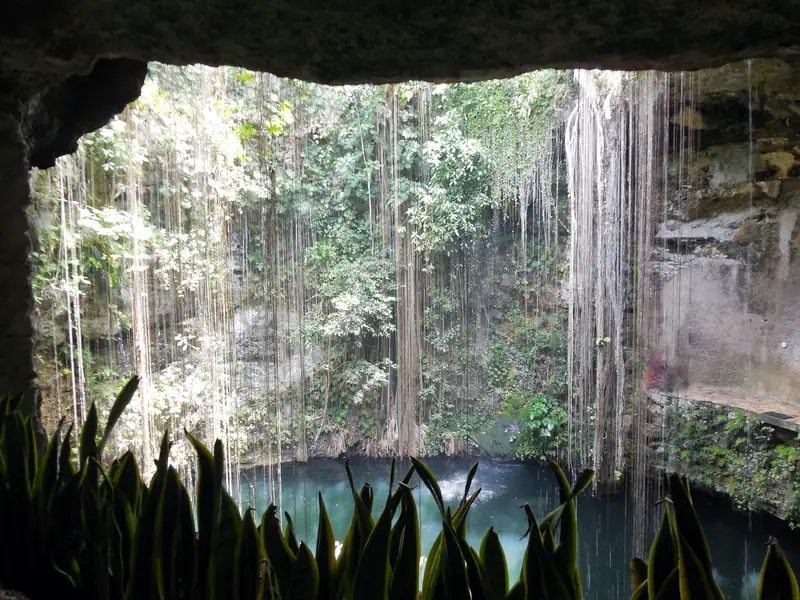
Clear turquoise water in Gran Cenote flowing under a mossy limestone overhang hung with tree roots, with sunlight at the far end of the cavern

Tulum cenotes: the best cenotes near Tulum

A cenote is a natural limestone sinkhole filled with clear groundwater, and around Tulum more than a dozen you can swim in lie within about 40 km of town. The closest, Cenote Calavera and Gran Cenote, are 3 to 5 km out on the road to Cobá. Most charge about 100 to 500 pesos, in cash.

The best cenotes near Tulum, ranked

Ranked by this site for a first visit: how close each one is, how clear the water is, and whether you can swim without a guide. Distances are by road from Tulum town centre.

  1. From town: 5 km west, Cobá road (Hwy 109)

    Type: Semi-open, cavern

    Snorkel two clear open pools joined by a cavern, with freshwater turtles, wooden walkways, showers and lockers. Life jacket compulsory.

  2. From town: 22 km north, Hwy 307 km 124

    Type: Cavern

    Swim and snorkel the two "eyes", take a guided snorkel into the Bat Cave, or cavern dive with a guide if you hold Open Water.

  3. From town: 3.3 km west, Cobá road (Hwy 109)

    Type: Semi-open

    Jump about 2.5 to 3 m through holes in the rock roof, or climb down the ladder. Deep water: not for weak swimmers or young children.

  4. From town: 10.8 km north, Tankah (Hwy 307)

    Type: Open mangrove channel

    Snorkel or kayak a shallow, brackish channel linked underground to the sea. A crocodile lives here; check the swimming rules on the day.

  5. From town: 9.2 km west, Cobá road (Hwy 109)

    Type: Open

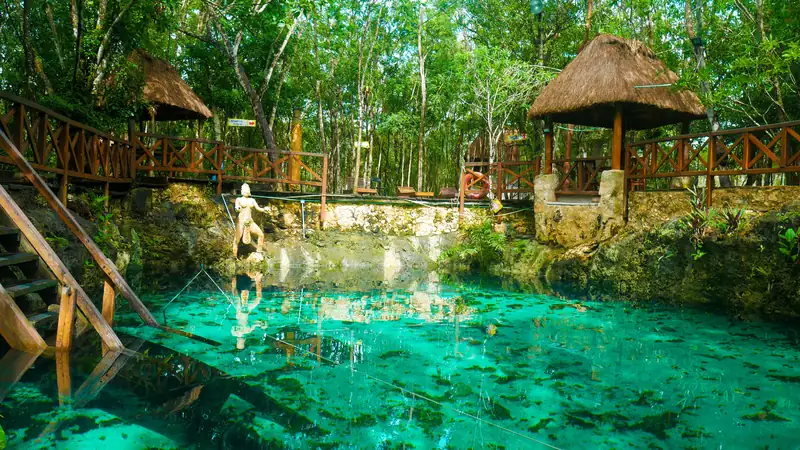
    A round, pool-like cenote about 3 m deep with a small zipline into the water, a waterslide and a restaurant. Easy with children.

  6. From town: 8.8 km west, Cobá road (Hwy 109)

    Type: Open, cave for divers

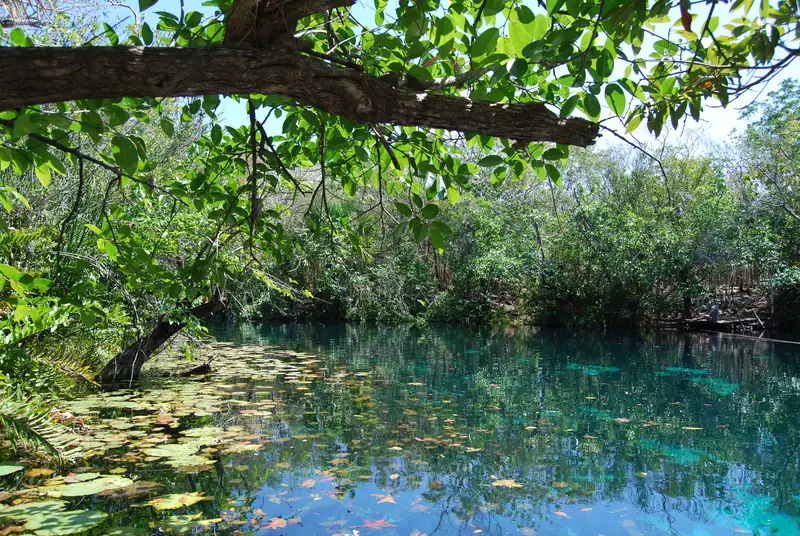
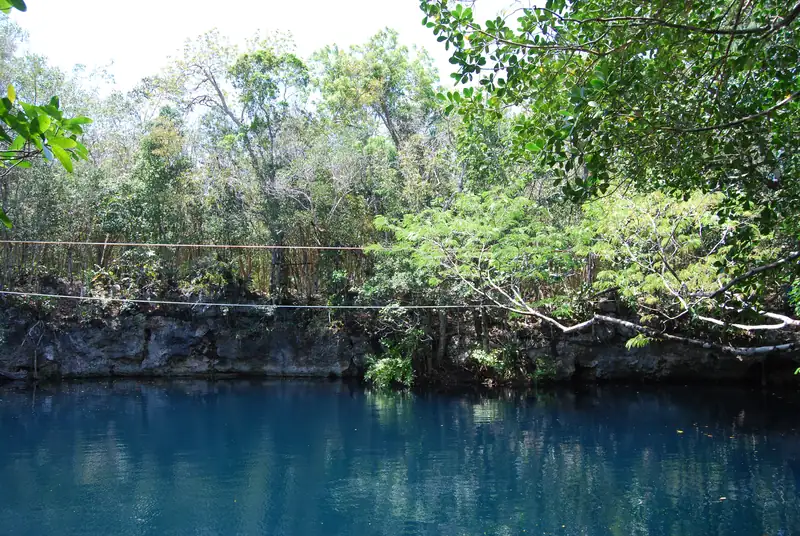
    A lily pond about 3 m deep at the surface, with a beginner cavern dive below. Next door to Zacil-Ha.

  7. From town: 4.8 km south-west, Hwy 307

    Type: Open

    Two quiet open cenotes facing each other across the highway, with jump spots and cavern diving. Close enough to cycle.

  8. 8. Cenote Taak Bi Ha

    From town: 22 km north, Dos Ojos park road

    Type: Cave

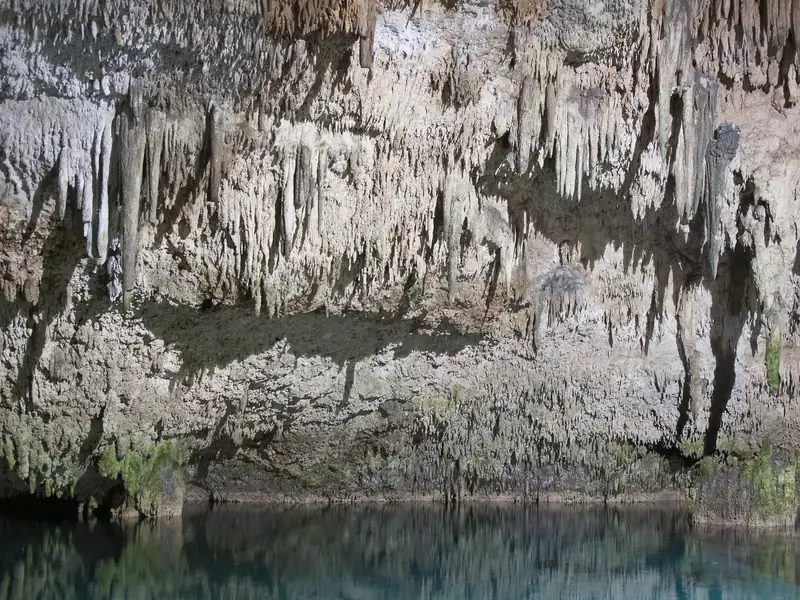
    Stairs down into a cave cenote hung with stalactites. The river-like section needs a local guide with a lamp.

  9. From town: 25 km north, Hwy 307

    Type: Cavern

    A guided cavern snorkel run by the site operator, Cenotes Sac Actun, with wetsuit, mask and life jacket.

  10. From town: 40 km north, near Puerto Aventuras

    Type: Open

    Open pools beside Hwy 307, closer to Playa del Carmen than to Tulum, with two more open cenotes next door.

  11. From town: 16 km south, Hwy 307

    Type: Deep cenote, divers only

    Scuba only, with a guide. A hydrogen sulfide cloud around 30 m down looks like a river. Operators ask for Advanced Open Water.

  12. From town: 53 km west, Cobá road (Hwy 109)

    Type: Underground

    Three underground cenotes near Cobá village, usually reached by stairs. Pair them with the Cobá ruins.

Road distances come from OpenStreetMap routing (October 2026). Allow more time than a route planner suggests, especially on the dirt roads into Dos Ojos and Taak Bi Ha. Types follow the way guides describe each cenote: open to the sky, semi-open under a rock overhang, cavern (in a cave but within sight of daylight) or cave.

Tulum cenote quick facts

  • 3.3 km

    Nearest cenote

    Cenote Calavera, on the Cobá road. Gran Cenote is 5 km out on the same road.

  • 100 to 500

    Pesos to get in

    Typical adult entry at cenotes near Tulum in 2026 travel guides, checked October 2026. Cash.

  • 8 am to 5 pm

    Usual hours

    Most open between 8 and 9 am and close between 5 and 6 pm.

  • 24 to 25°C

    Water temperature

    Roughly the same all year and cooler than the sea, according to dive guides. No measured Tulum study was found.

Where
Tulum, Quintana Roo, Mexico, on the Caribbean coast of the Yucatán Peninsula. Town centre 20.2108° N, 87.4632° W
Two roads
Hwy 109 runs west toward Cobá past Calavera, Gran Cenote, Car Wash and Zacil-Ha. Hwy 307 runs up and down the coast: north to Casa Cenote, Dos Ojos and Puerto Aventuras, south to Cristal, Escondido and Angelita
Cave systems
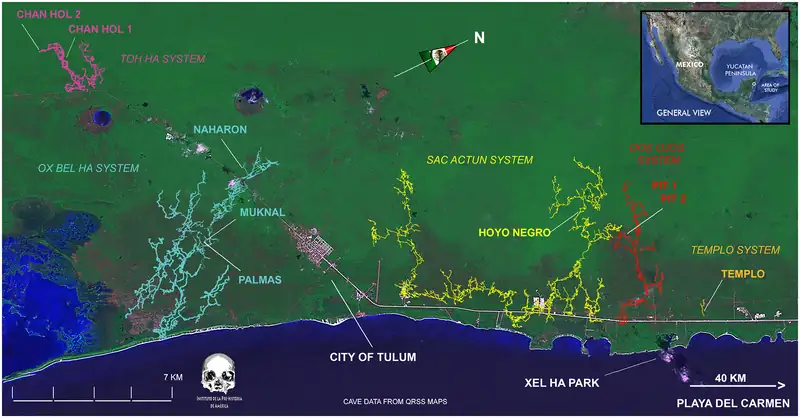
Gran Cenote and Dos Ojos are entrances to Sistema Sac Actun. With Ox Bel Ha, south of town, it is one of the two longest underwater cave systems known
Best time
The dry season, about November to May. Hurricane season runs from 1 June to 30 November. Cenotes are inland fresh water, so sargassum seaweed on the beaches does not reach them

What a cenote is

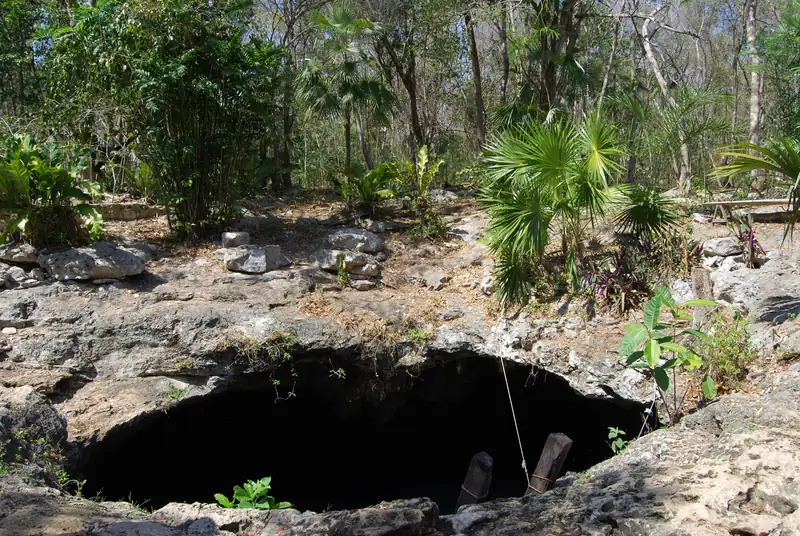
A cenote is a pit in the limestone where the roof of an underground cave has fallen in and exposed the groundwater below. Slightly acidic rain dissolves the rock and leaves hollows underground, and in time their roofs collapse. The word comes from Yucatec Mayats'ono'ot, a place with water you can reach.

The Yucatán Peninsula has almost no rivers on the surface, so cenotes were the Maya's year-round water supply. Archaeologists believe the Maya also saw them as openings to Xibalba, the underworld. An estimated 10,000 dot the peninsula.

Tulum's cenotes are entrances to long flooded cave systems near the coast, where rainwater floats on heavier seawater. That boundary, the halocline, shows up as a blurry, shimmering layer when you swim or dive through it. They are not part of the ring of cenotes over the Chicxulub crater, which lies about 300 km away in Yucatán state.

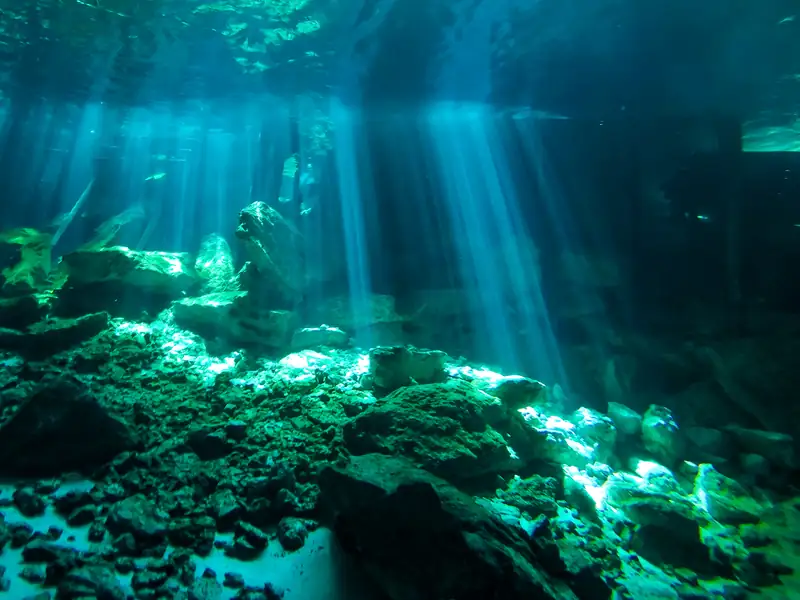
Shafts of sunlight slanting through clear blue water onto rocks on the floor of the Dos Ojos cavern
Sunlight in the cavern at Dos Ojos.

How to visit a cenote near Tulum

You can visit every swimming cenote on the list on your own. Angelita and The Pit are for divers with an operator, and Sac Actun is a guided tour.

Fees and cash
Most cenotes near Tulum charge between about 100 and 500 pesos per adult, according to 2026 travel guides (checked October 2026). No cenote publishes an official price list, so the board at the gate decides. Bring cash pesos in small notes: there are no ATMs at the gates, cards often carry a surcharge and dollars go at a poor rate.
Sunscreen and showers
Shower before you get in, and skip sunscreen, insect repellent, lotion and make-up. Guides disagree on whether "biodegradable" sunscreen is allowed, so the safe choice is none: cover up with a rash guard or long sleeves instead.
Getting there
Calavera, Gran Cenote and Cristal and Escondido are 3 to 5 km from town, close enough to cycle. A taxi to Gran Cenote costs about US$5 to $8 (InfoMexico, April 2026). Colectivos, the shared vans on Hwy 307, stop at the Dos Ojos gate, but the water is still a long walk down the park road from there.
When to go
Arrive at opening, around 8 am, for the quietest water. At Gran Cenote one 2026 guide also suggests after about 2:30 pm. Bring water shoes, a towel and coins for a locker.

Tulum cenote tours

Six well-reviewed tours that swim at cenotes around Tulum, from a three-cenote morning to community-run cave cenotes. Check what each price leaves out: some charge cenote fees in cash on the day. The tours page lists all 21 cenote tours.

Visits a Tulum cenote

Tulum Mexico: Cenote Triple Adventure Tour

5.0 (17 reviews)4 hours

A morning run from central Tulum to Gran Cenote, the jump platforms at Cenote Zemway and the mangrove edge of Casa Cenote, with snorkel gear, towels and transport between stops.

No pickup: meet on site

Visits a Tulum cenote

Riviera Maya: Tulum Ruins and 2 Cenotes Half-Day Tour

4.4 (1,186 reviews)8-8.5 hours

The most-reviewed cenote combo in the area: a guided walk round the clifftop Tulum ruins, then swims at open Cenote Mariposa and semi-cavern Chen-Ha; site and park fees of about $40 are paid in cash on the day.

Pickup: Riviera Maya hotels

Visits a Tulum cenote

Tulum: Ancestral Waters Cave Cenotes Jungle Walk & Meal

4.9 (98 reviews)6 hours

Young guides from the Chemuyil community lead you on jungle trails to three dark cave cenotes with headlamps and wetsuits, then back to the village for a home-cooked meal.

No pickup: meet on site

Visits a Tulum cenote

From Riviera Maya: 3 Cenotes Adventure Tour with Lunch

4.8 (60 reviews)6 hours

A ten-person van tour that reaches Casa Cenote before the crowds, moves on to Taak Bi Ha, and finishes with lamplit snorkeling in a private underground cenote after a vegetarian jungle lunch.

Pickup: Tulum

Visits a Tulum cenote

Tulum: 4 Sacred Cenotes Adventure, Rappel & Mayan ceremony

4.7 (39 reviews)4 hours

A budget park visit at Yax Muul on the Tulum-Playa highway: a copal blessing from a local shaman, a 12 m rappel into a cavern and swims in four open and enclosed cenotes.

No pickup: meet on site

Visits a Tulum cenote

Tulum: Private Tour of 2 Cenotes in Sistema Sac Actun, the world's longest underground river

4.9 (21 reviews)5 hours

A private car tour to two very different cenotes, Xunaan Ha and Sac Actun, one a cave and one open to the sky, with a regional meal before the drive back.

Pickup: Tulum, Playa del Carmen, Puerto Morelos or Puerto Aventuras

Prices and ratings were taken from GetYourGuide and can change. Booking through these links supports this site at no extra cost to you.

See all Tulum cenote and ruins tours

Where to stay near the cenotes

For cenotes by bike, stay in Tulum town: it is about 4 km from Gran Cenote, and the ADO bus terminal and colectivo stops are there. To wake up beside a cenote, look along Hwy 307 north of town. The beach Hotel Zone puts you on the sea but 7 to 12 km from Gran Cenote.

  • Boutique Hotel Posada 06 TulumIn the town centre, 3.9 km in a straight line from Gran Cenote. Walk to the ADO bus terminal and cycle out to the cenotes on the Cobá road.
  • Hotel Casa Tortuga TulumOn Hwy 307 north of town, 4.7 km from Dos Ojos. A stay includes access to the hotel’s park of four cenotes. There is no shuttle, so come by car.
  • Casa Cenote HotelOn the beach at Tankah, across the road from Casa Cenote itself, with free parking, kayaks and intro dive classes.

Around Tulum: ruins, lagoons and turtles

The cenotes sit among some of the Riviera Maya's best-known day trips.

  • Tulum ruins

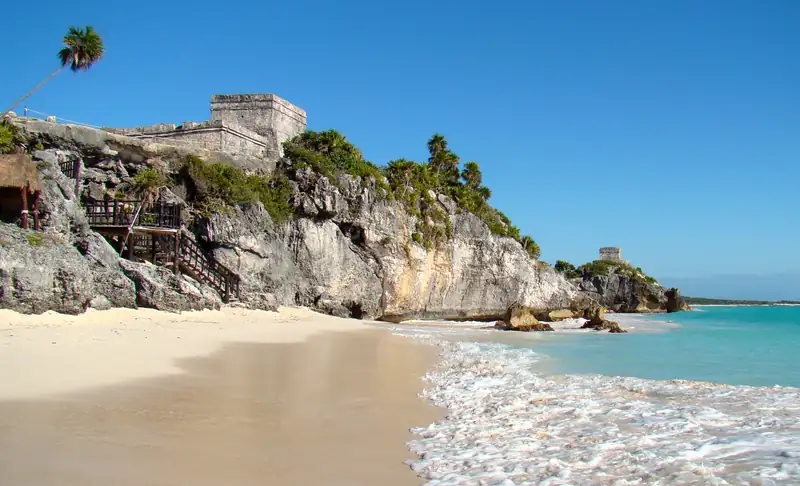
    A walled Maya port on a cliff above the Caribbean, at the edge of town. Foreign visitors pay 265 pesos in total: 100 for Parque del Jaguar plus 165 for the ruins and national park (federal decree in force from 20 July 2026).

  • Laguna Kaan Luum

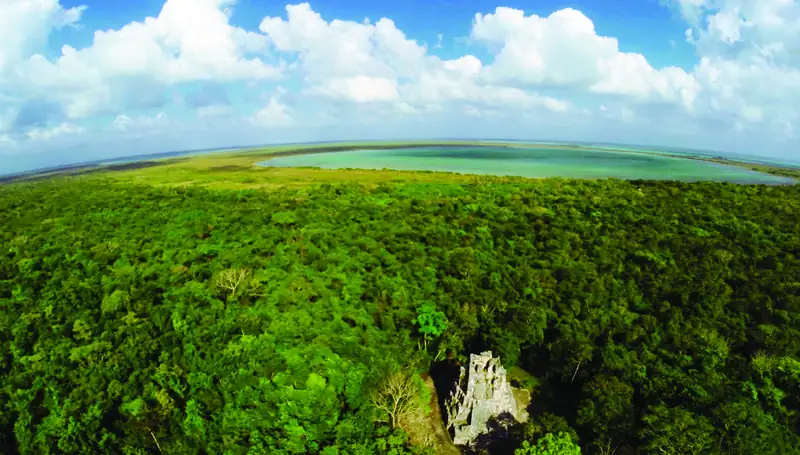
    A shallow lagoon about 8 km from central Tulum, around a cenote that drops more than 80 m. The deep centre is roped off.

  • Sian Ka'an

    The UNESCO-listed biosphere reserve south of Tulum. Tours from town float a canal between two lagoons near Muyil or take a boat out to Punta Allen.

  • Akumal

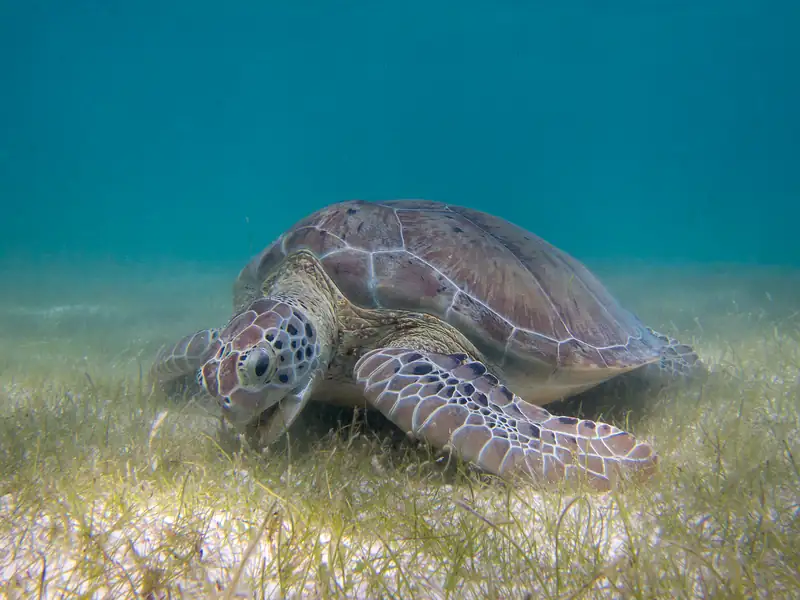
    A bay north of Tulum protected for green, loggerhead and hawksbill turtles since 2016. Keep at least 3 m from the turtles.

  • Cobá

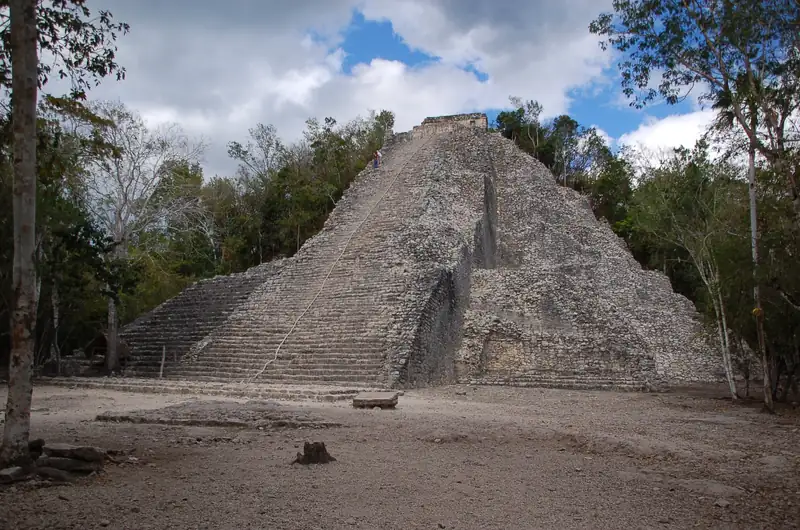
    A Maya city 52 km north-west of the Tulum ruins on Hwy 109, with three cave cenotes near the village.

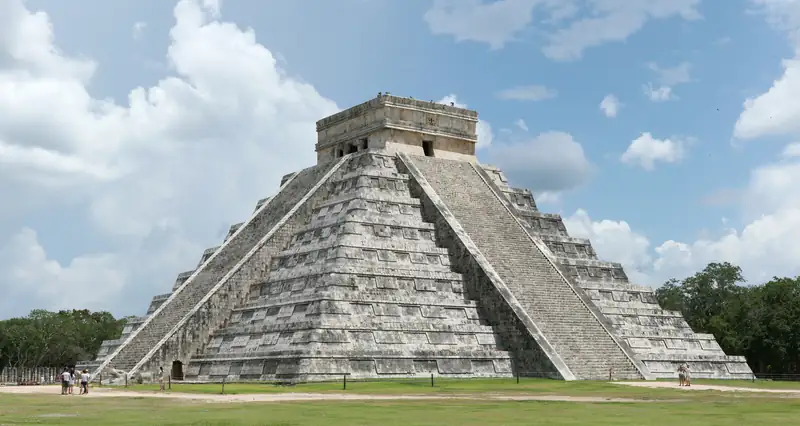
  • Chichén Itzá

    The inland Maya city with the Sacred Cenote. Tours from Tulum take 11 to 12 hours and usually add a cenote near Valladolid.

Cenote guides

Every cenote on the list, plus how cenotes form, the Maya story, swimming rules and diving.

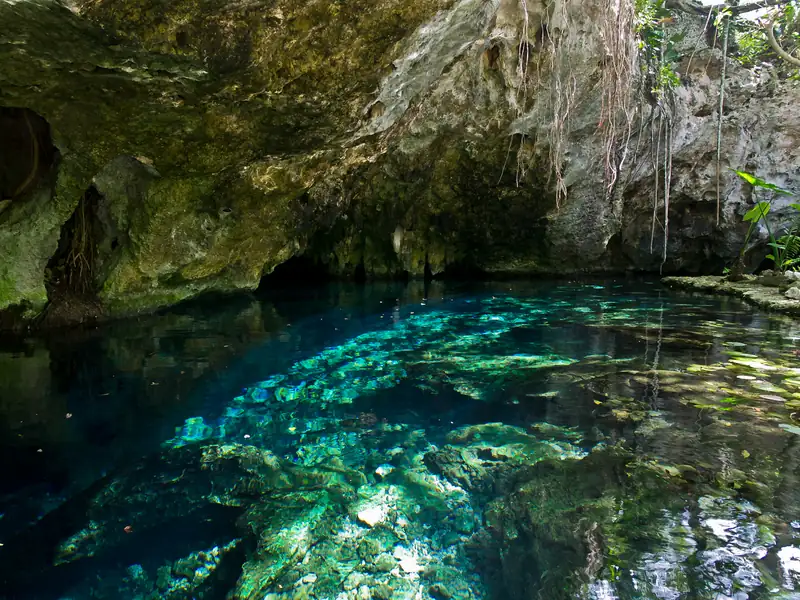
Shallow, clear water over pale rock at the edge of the cavern in Gran Cenote, near Tulum

What is a cenote?

A cenote is a natural pit where the limestone roof has collapsed and exposed the groundwater below.

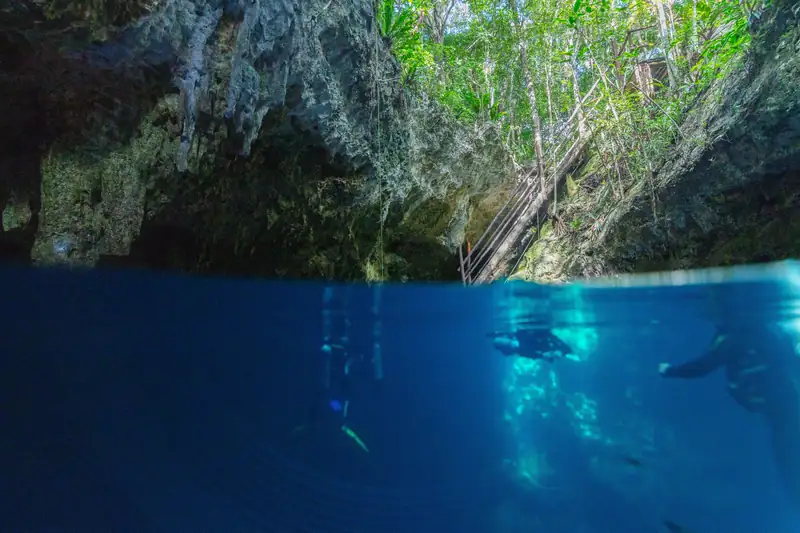
Half-underwater view of divers below the surface of Cenote El Pit, with the stairway and jungle above

Cenote diving in Tulum

Most cenote diving near Tulum is guided cavern diving: you stay within sight of daylight and need Open Water certification plus good buoyancy.

Gran Cenote's open pool ringed by limestone walls, ferns and jungle trees

Gran Cenote, Tulum

Gran Cenote is a semi-open cenote 5 km west of Tulum on the road to Cobá: two clear pools joined by a cavern, with wooden walkways and resident turtles.

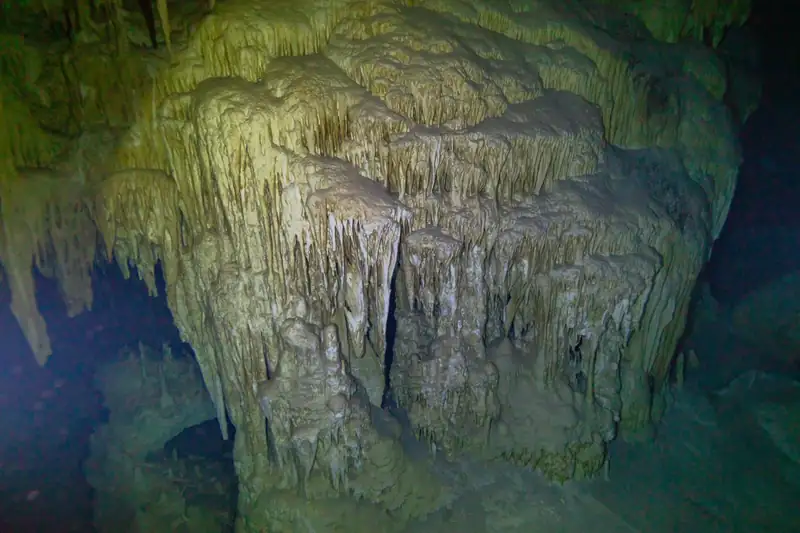
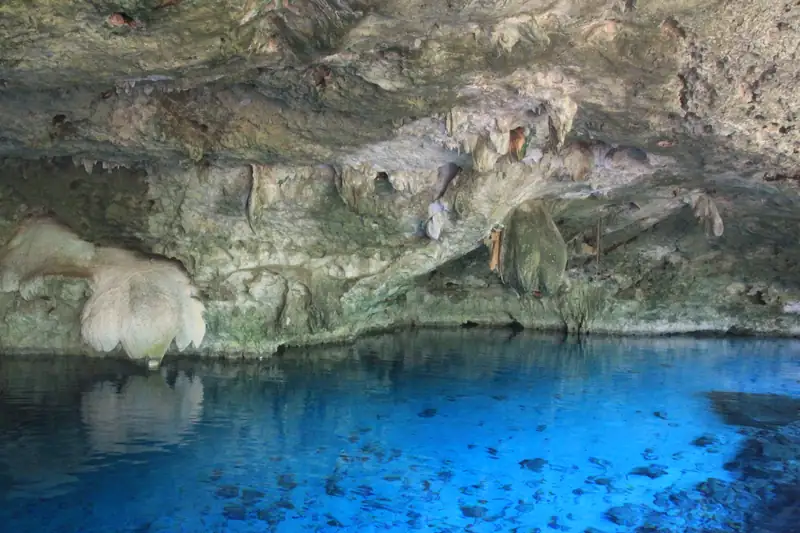
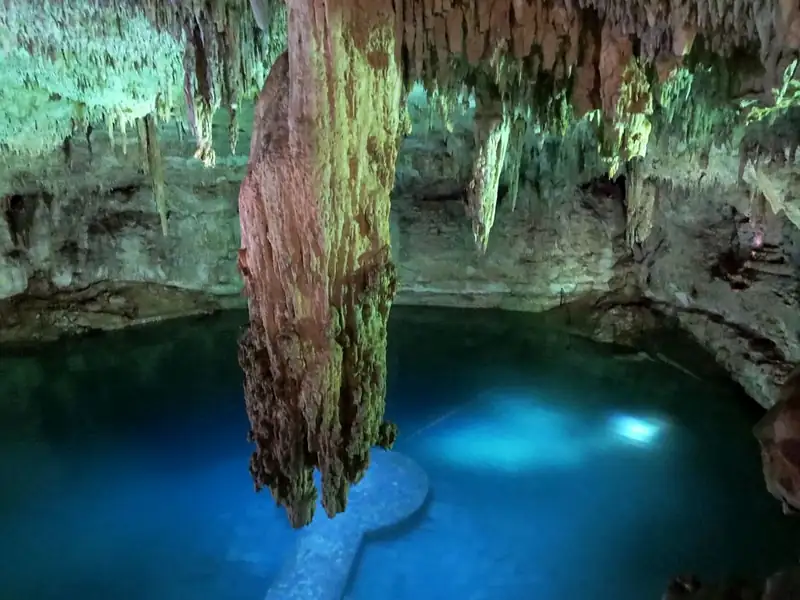
Bright blue water under the cave ceiling at Cenote Dos Ojos, with large flowstone formations

Cenote Dos Ojos (Two Eyes Cenote)

Cenote Dos Ojos, the two eyes cenote, is a pair of cenotes joined by a large cavern in Parque Dos Ojos, about 22 km north of Tulum off Highway 307.

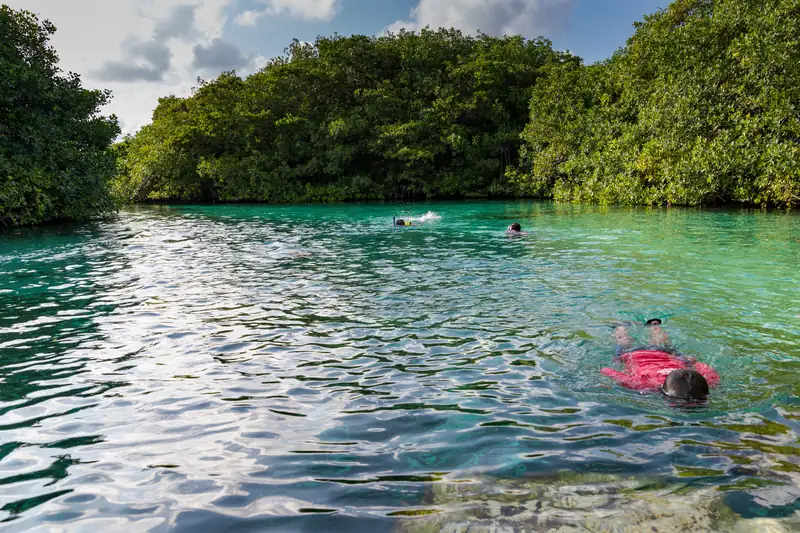
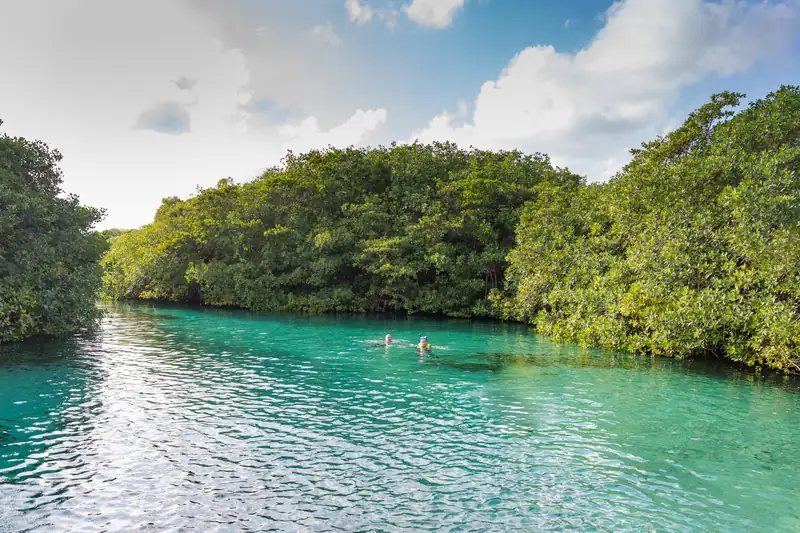
Casa Cenote north of Tulum: an open turquoise channel lined with mangroves, two swimmers in the distance

Casa Cenote (Cenote Manatí)

Casa Cenote, also called Cenote Manatí, is an open mangrove channel at Tankah Tres, about 11 km north of Tulum by road, linked underground to the sea.

Cenote Kantun Chi, a different open cenote on the Riviera Maya, shown because no licensed photo of Cenote Cristalino was found

Cenote Cristalino

Cenote Cristalino is an open, mostly shallow cenote beside Highway 307 at Xpu-Ha, about 40 km north of Tulum and next to Cenote Azul.

Cenote Corazón Paraíso, a different open jungle cenote with a wooden dock, shown because no licensed photo of Jardín del Edén was found

Cenote Jardín del Edén (Ponderosa)

Cenote Jardín del Edén, also called Ponderosa, is a large open cenote off Highway 307 about 3 km from Puerto Aventuras and 40 km north of Tulum.

Cenote Zacil-Ha near Tulum: a small open pool with steps, thatched shelters and wooden railings

Cenote Zacil-Ha

Cenote Zacil-Ha is a small, round, open cenote about 3 m deep, 9.2 km from Tulum on the road to Cobá, next door to Cenote Carwash.

Cenote Carwash (Aktun Ha) from the shore: lily pads and clear water under jungle trees

Cenote Carwash (Aktun Ha)

Cenote Carwash, also called Aktun Ha, is an open, lily-covered pond 8.8 km from Tulum on the Cobá road, next to Zacil-Ha.

The surface pool of Cenote Angelita south of Tulum

Cenote Angelita

Cenote Angelita is a deep vertical cenote, about 60 m, beside Highway 307 about 16 km south of Tulum.

Wooden deck at a cavern cenote entrance in the jungle (Cenote Nohoch Nah Chich), shown because no licensed photo of Casa Tortuga was found

Cenotes Casa Tortuga

Cenotes Casa Tortuga is a cenote park on Highway 307 at km 239, about 14 km north of Tulum, where a guide leads you through open and cave cenotes.

Plan your visit

Where to stay, entrance fees, the map, getting around and when to come.

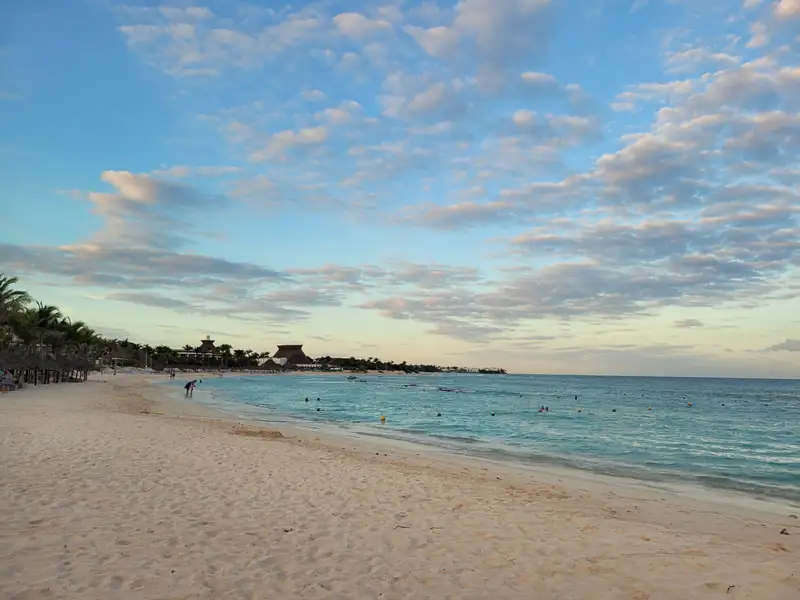
Playa Paraíso in Tulum in soft late-day light

Best time to visit Tulum

The best time to visit Tulum is December to April, the dry season, with daily highs of 29 to 31°C and the least rain; March is the driest month.

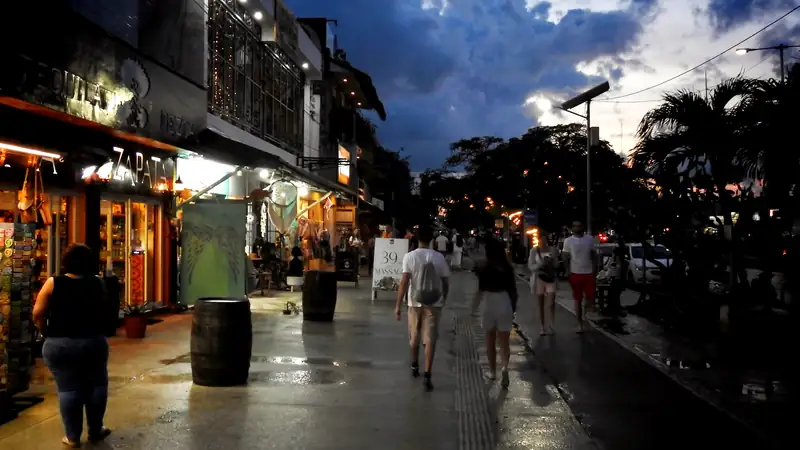
Avenida Tulum, the main street of Tulum town, at dusk after rain

Is Tulum safe?

Tulum is in Quintana Roo, which the US State Department rates Level 2, exercise increased caution, in the advisory reissued on 29 May 2026.

Cenote Car Wash from the shore, lily pads and clear water under jungle trees

Tulum in December

December is one of the best months for Tulum: dry, with average highs of 29°C, lows of 19°C and 42 mm of rain, and hurricane season over on 30 November.

Wooden boardwalk and swimmers in the cavern at Cenote Dos Ojos

Tulum in January

January is Tulum's coolest month: average highs of 29°C, lows of 18°C and about 60 mm of rain, with the sea at 27°C.

Cenote Corazón Paraíso near Tulum, a wooden dock on an open jungle cenote

Tulum in February

February is one of Tulum's driest, most settled months: average highs of 30°C, lows of 19°C and about 42 mm of rain.

Underwater in Dos Ojos, sunbeams slanting down through the cavern onto rocks

Tulum in March

March is Tulum's driest month, with only about 33 mm of rain, average highs of 30°C, lows of 21°C and the sea at about 27°C.

Around Tulum

The ruins, beaches, Sian Ka'an, Akumal and day trips inland.

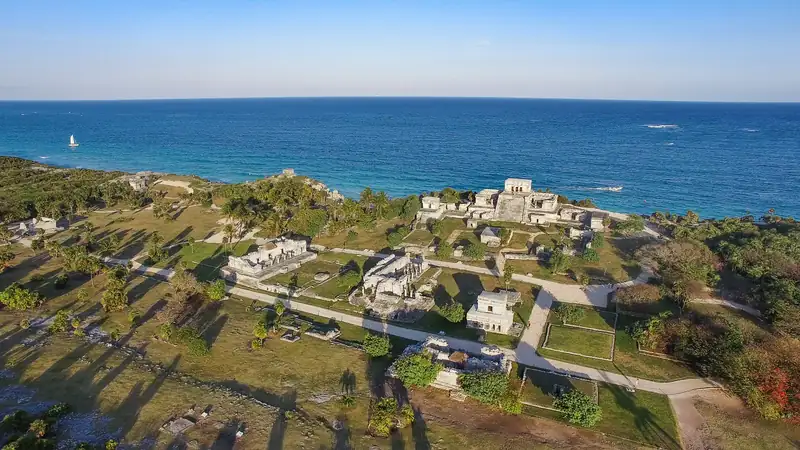
Aerial view of the Tulum archaeological site on the coast above the Caribbean

Things to do in Tulum

The top things to do in Tulum are swimming in cenotes such as Gran Cenote and Calavera, 3 to 5 km from town, and walking the clifftop Maya ruins.

Tulum cenote questions

What is the most famous cenote?

There is no official ranking. Near Tulum, Gran Cenote and Dos Ojos get the most Google searches: about 3,600 and 2,900 a month in the US under their main names (keyword data, October 2026). Further inland, Ik Kil near Chichén Itzá gets about 6,600. The Sacred Cenote at Chichén Itzá is the famous one in history: Bishop Diego de Landa wrote in the 16th century that people were thrown into it in times of drought.

Is it okay to swim in cenotes?

Yes, at the cenotes that sell swimming tickets, such as Gran Cenote, Dos Ojos, Calavera and Zacil-Ha. Shower first and wear no sunscreen or repellent. Life jackets are compulsory at Gran Cenote and Dos Ojos. Stay inside the marked areas and never swim into a cave past the guide line. Angelita and The Pit are for scuba divers with a guide only, and crocodiles live in some mangrove cenotes, Casa Cenote among them.

Why do cenotes close at 5?

None of the sources checked for this site gives an official reason. Most cenotes near Tulum are run by ejidos (communal landholding groups) or private owners, open between 8 and 9 am and close between 5 and 6 pm. Last entry comes earlier: around 4:15 pm at Gran Cenote, by some accounts. Plan to arrive by mid-afternoon.

How much is Gran Cenote?

About 500 pesos per adult, the figure most 2026 travel guides give (checked October 2026), though a few quote less. There is no official online price list, so the board at the gate is the final word. Bring cash pesos: some guides say the gate is cash only and others report a card reader. Snorkel hire and lockers cost extra.

What is the best cenote near Tulum?

For a first visit, Gran Cenote: it is 5 km from town, the water is clear enough to snorkel with turtles, and it has showers, lockers and life jackets. For a bigger cavern, go to Dos Ojos, 22 km north. For jumping, Calavera. With children, Zacil-Ha. Certified divers can go deeper at Angelita and The Pit, both with a hydrogen sulfide cloud around 30 m down.

Which is better, Chichén Itzá or Tulum?

They are different days out. The Tulum ruins are a walled Maya port on a cliff above the sea, at the edge of town, and a foreign visitor pays 265 pesos in total, Parque del Jaguar included (from 20 July 2026). Chichén Itzá is an inland Maya city with the Sacred Cenote, and INAH, the national archaeology institute, said in 2025 that it draws more visitors than Tulum. From Tulum it is a long day: tours run 11 to 12 hours and include a cenote near Valladolid. With one free day, do the Tulum ruins and a cenote. With two, add Chichén Itzá.