Tulum: Archaeological Zone Guided Walking Tour
75 minutes - 1 day
A guided walk through the walled seaport of Tulum, then time on the beaches of Parque del Jaguar below the cliffs.
No pickup: meet on site
from$17
Check availability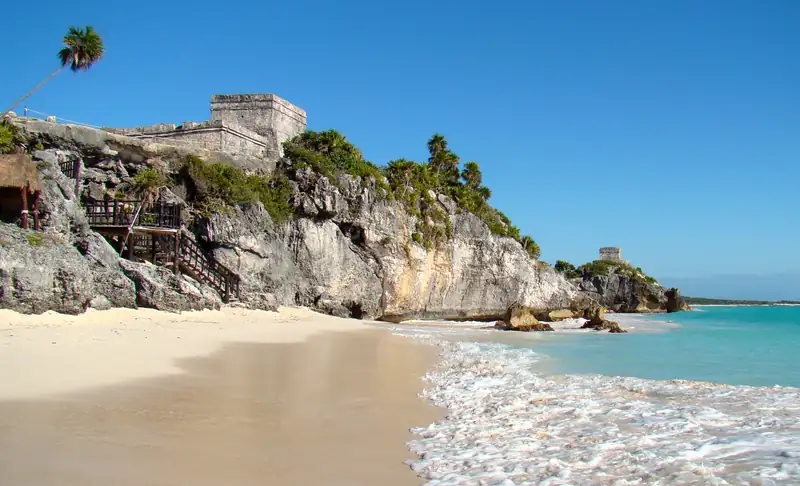
The Tulum ruins are a walled Maya port on a cliff above the Caribbean, inside Parque del Jaguar just east of Tulum town. INAH lists hours of 8:00 to 17:00, last entry 15:30. Since 20 July 2026 foreign visitors pay MXN 265 in total and Mexicans MXN 80, with Mexicans free on Sundays.
The Tulum ruins are the remains of a walled Maya port on a low cliff above the Caribbean, about 3.5 km east of the centre of Tulum town in a straight line. INAH, Mexico’s national institute of anthropology and history, opens the site from 8:00 to 17:00, with last entry at 15:30. Foreign visitors pay MXN 265 in total since July 2026; Mexicans pay MXN 80, or nothing on Sunday.
The site sits inside Parque del Jaguar, a federal park that formally opened in September 2024. That park changed how you get in, what you pay and where you can park, so the details below matter more than they did a few years ago.
A presidential decree published on 17 July 2026 cut the fees and merged two of them. It took effect on 20 July 2026 and runs through 2027. INAH’s own Tulum page shows the same totals.
| Who | Parque del Jaguar | Ruins + Tulum National Park | Total |
|---|---|---|---|
| Foreign visitors | MXN 100 | MXN 165 | MXN 265 |
| Mexican nationals, Monday to Saturday | Free | MXN 80 | MXN 80 |
| Mexican nationals, Sunday | Free | Free | Free |
| Tulum municipality residents | Free | Free | Free |
Checked October 2026 against the DOF decree of 17 July 2026 and INAH’s Tulum page.
| Practical detail | 2026 |
|---|---|
| Hours | 8:00 to 17:00 daily |
| Last entry | 15:30 |
| Electric carts inside the park | MXN 20 per person (Por Esto, July 2026) |
| Exempt from fees | Minors, older adults, people with disabilities, pensioners, students, teachers, accredited guides |
The MXN 165 is one payment covering two federal charges: MXN 100 for the archaeological zone and MXN 65 for Tulum National Park. You will see “MXN 165” quoted alone in some news reports. That figure leaves out the separate MXN 100 park entry, which is why INAH’s page says MXN 265.
Before the decree, the park and the national park charged MXN 415 between them for foreigners, on top of INAH’s MXN 100 for the ruins (INAH bulletin, February 2025). The cut is large, so expect older blogs to show much higher prices.
Coach day trips from Cancún and Playa del Carmen often leave entry fees out of the tour price. One popular half-day tour asks for about USD 40 in cash on the day for site and park fees. Check what your booking includes before you go.
Parque del Jaguar covers 2,913 hectares and joins Tulum National Park (declared in 1981), a jaguar protection area (2022), part of the Caribe Mexicano biosphere reserve and the archaeological zone. Grupo Mundo Maya, a state company under the defence ministry, runs the gates, with CONANP (the national parks agency) and INAH managing their own parts.
Inside, INAH says you can walk, rent a bike or ride the electric vehicles on a set route. Trails link the ruins with bird-watching towers, viewpoints, a lighthouse and beach access points.
Driving is the awkward part. In 2026 the park has no public car park, according to the Tulum Times (updated October 2026). Drivers are told they need a booking at a restaurant or beach club inside the park before they can drive in. Arriving by bike or being dropped at the entrance avoids the parking problem. Our getting around Tulum guide covers those options.
The Museo Regional de la Costa Oriental (MURECO), INAH’s museum, is also inside the park. It opened on 7 September 2024, entry is free once you have paid the park fee, and INAH lists it as open Tuesday to Sunday, 9:00 to 17:00.
INAH describes Tulum as the largest and most important town of Ecab, the Maya province that controlled most of the north-east of the Yucatán Peninsula in the Late Postclassic period, roughly 1400 to 1550 AD. It was a trading port. Some buildings worked as markers for boats finding the gaps in the reef.
Sixteenth-century sources call it Zamá, which in Maya may mean “morning” or “dawn”. Tulum, the later name, means “wall”, after the defences that still enclose the area open to visitors. Juan Díaz, chronicler of Juan de Grijalva’s 1518 expedition, wrote of a large city with a tall tower. That tower is the building now called El Castillo.
What INAH’s site guide highlights:
The American archaeologist Sylvanus Morley began research here in 1916, and the site opened to the public in 1939. INAH says Tulum receives more than 3,000 visitors a day.
INAH notes that buildings in this East Coast style are small, some of them miniature. The draw is the setting: grey stone on a cliff with turquoise water below. For the bigger pyramid-and-jungle sites, see the Cobá ruins and Chichén Itzá from Tulum.
INAH’s guide notes that the city was built right on the coast with access to the beach. Four beaches lie below the cliffs inside Parque del Jaguar: Playa Santa Fe, Playa Pescadores, Playa Maya and Playa del Mangle.
Access to them has been contested since the park opened. Quintana Roo’s governor declared them free every day of the year in November 2025, but residents blocked Highway 307 in May 2026 to protest that the promise was not being kept. Beach entry itself costs nothing. Getting there by car is the problem, as above. The Tulum beaches guide covers each beach and the free access points further south.
The ruins take a morning. The closest cenotes are on the Cobá road west of town: Cenote Calavera is about 3.3 km from the centre and Gran Cenote about 5 km. Cenote Cristal and Escondido sit about 4.8 km south-west on Highway 307. Our cenote entrance fees page lists what each one charges.
Two of the tours below combine the ruins with cenote swims:
There is also a two-hour boat snorkel on the reef that passes the ruins from the water. The tours page lists every Tulum ruins and cenote tour we checked.
For where the ruins fit into a longer stay, see things to do in Tulum and our list of cenotes near Tulum.
75 minutes - 1 day
A guided walk through the walled seaport of Tulum, then time on the beaches of Parque del Jaguar below the cliffs.
No pickup: meet on site
from$17
Check availability8-8.5 hours
The most-reviewed cenote combo in the area: a guided walk round the clifftop Tulum ruins, then swims at open Cenote Mariposa and semi-cavern Chen-Ha; site and park fees of about $40 are paid in cash on the day.
Pickup: Riviera Maya hotels
from$29
Check availability7 hours
A ten-person day from Playa del Carmen: a guided walk through the Tulum ruins, then two hours swimming in unnamed jungle cenotes about 20 minutes away, with a Mexican lunch.
Pickup: Playa del Carmen
from$172
Check availability12 hours
Two ruins in one long day, Tulum by the sea and Cobá in the jungle, with lunch and a swim at Cenote Mariposa in between and a short honey and cacao tradition talk.
Pickup: Playa del Carmen and Riviera Maya
from$66
Check availability2 hours
A boat snorkel at two spots on Tulum's reef with an in-water guide, looking for turtles and rays, plus a view of the ruins from the sea.
No pickup: meet on site
from$33
Check availabilityPrices and ratings were taken from GetYourGuide and can change. Booking through these links supports this site at no extra cost to you.
Foreign visitors pay MXN 265 in total in 2026: MXN 100 to enter Parque del Jaguar and a single MXN 165 payment for the ruins and Tulum National Park. Mexicans pay MXN 80 from Monday to Saturday and nothing on Sunday. These rates come from a federal decree in force since 20 July 2026 and valid through 2027. Electric carts inside the park cost MXN 20 extra.
INAH, the federal body that runs the site, lists opening hours of 8:00 to 17:00 every day, with last entry at 15:30. Allow time to get from the park entrance to the ruins on foot, by bike or on the electric carts. If you arrive at 15:15 you may not reach the ticket point before the last entry time.
Only for some visitors. Under federal fee law, Mexican nationals and foreign residents of Mexico enter INAH archaeological zones free on Sundays, and the July 2026 decree also waives the national park fee for Mexicans that day. Foreign tourists pay the full MXN 265 every day of the week. Children, seniors, students and teachers are exempt under the same law.
About two hours covers the walled area and a look at the sea from the cliff. The guided walking tour we checked spends 75 minutes inside, and coach day trips from Cancún give the ruins about two hours. Add time for the walk or cart ride from the Parque del Jaguar entrance, and more if you plan to swim from the beaches below.
They suit different trips. Tulum's ruins sit on the coast a short ride from town, so you can see them in a morning and swim the same afternoon. Chichén Itzá is inland and needs a full day from Tulum. INAH counts Tulum as Mexico's third most visited pre-Hispanic site, behind Chichén Itzá and Teotihuacan. Many visitors do both on separate days.
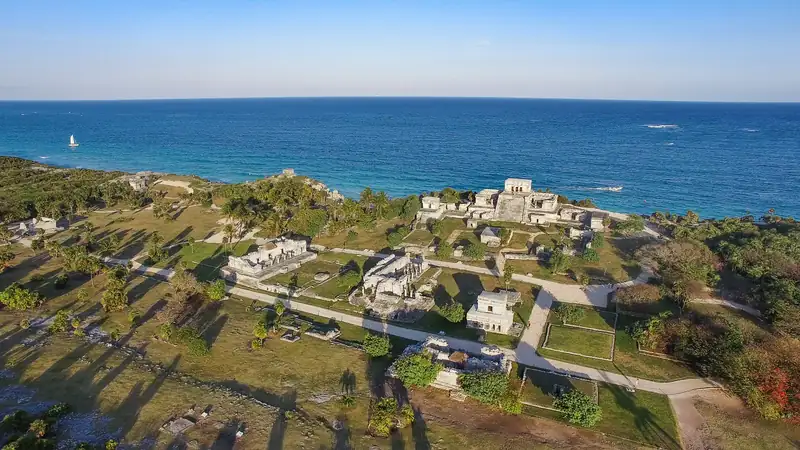
The top things to do in Tulum are swimming in cenotes such as Gran Cenote and Calavera, 3 to 5 km from town, and walking the clifftop Maya ruins.
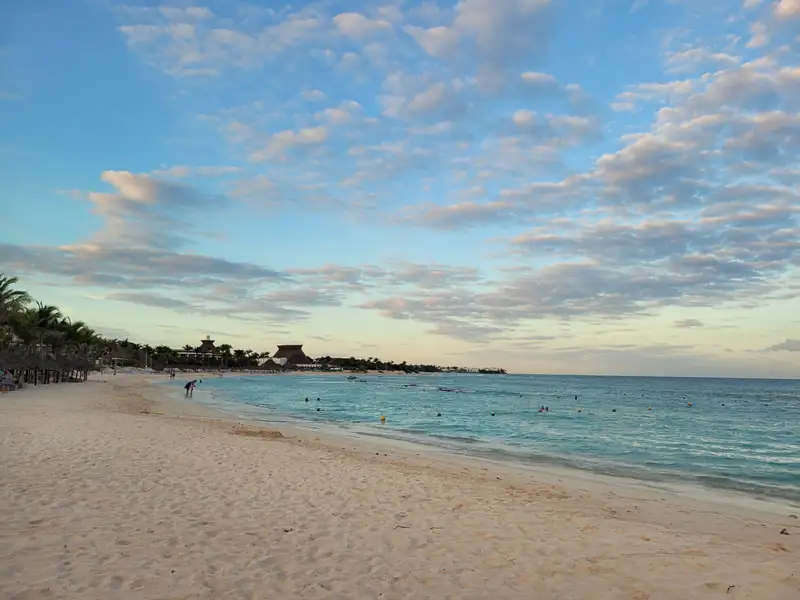
Tulum's beaches fall into two stretches.
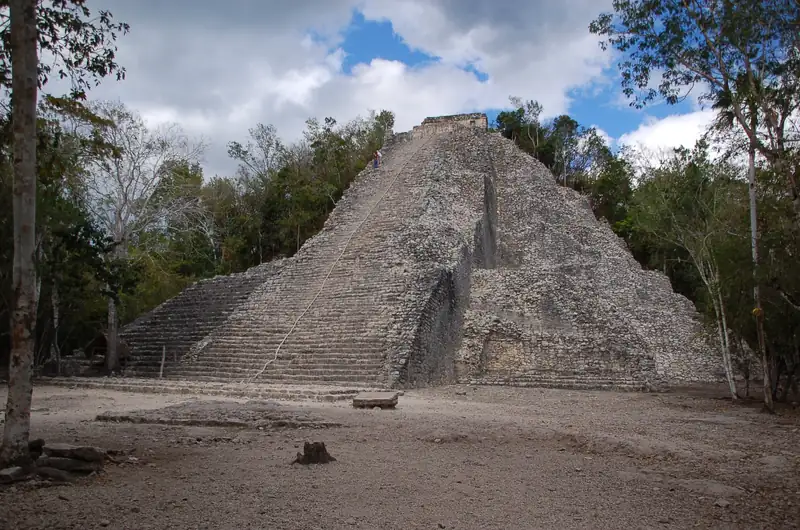
Cobá is a Maya city in the jungle 47 km west of Tulum, about 45 minutes by car on Highway 109.
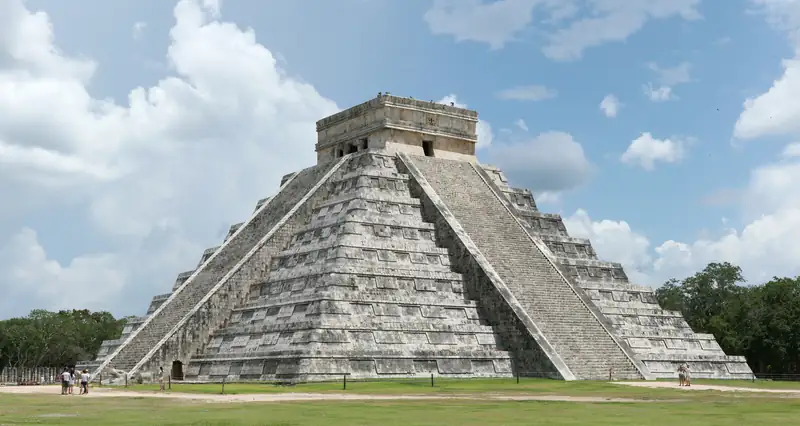
Chichén Itzá is 156 km from Tulum, about 2.5 hours by car on the inland road through Valladolid.