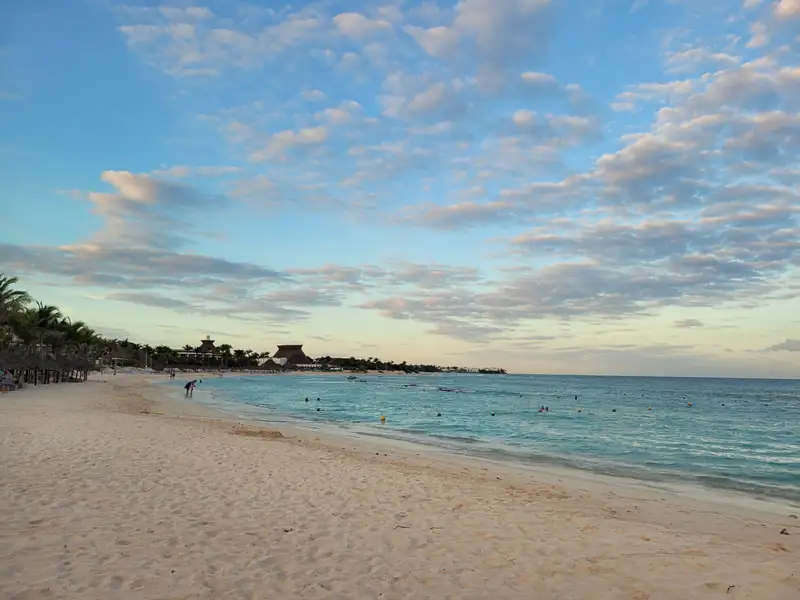
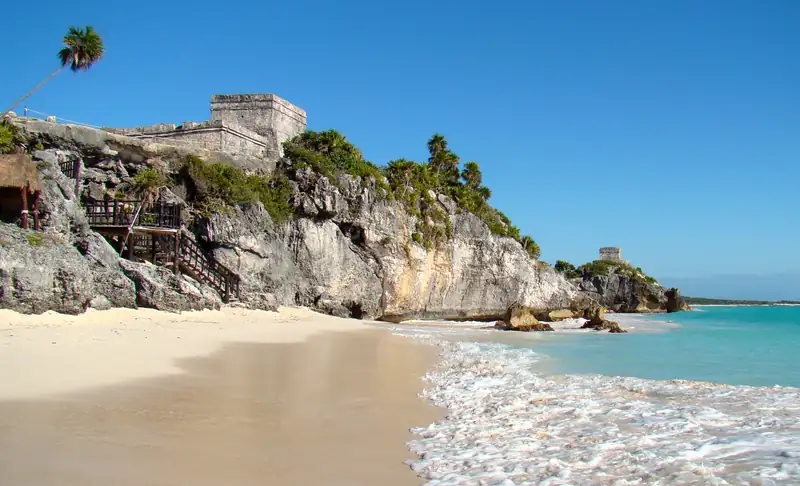
Tulum's beaches fall into two stretches. North of Avenida Cobá, Playa Santa Fe, Pescadores, Maya and del Mangle sit below the ruins inside Parque del Jaguar. South of it, a hotel zone road runs about 10 km toward Sian Ka'an, with public access at Playa Conchitas (km 4.5) and Playa del Pueblo (km 5.5). Beach entry is free.
Tulum’s beaches run along the coast east of town, and Avenida Cobá splits them in two. North of it, four beaches sit below the Tulum ruins inside Parque del Jaguar: Playa Santa Fe, Playa Pescadores, Playa Maya and Playa del Mangle. South of it, the hotel zone road runs about 10 km toward Sian Ka’an, lined with hotels and beach clubs, with free public access at Playa Conchitas (km 4.5) and Playa del Pueblo (km 5.5). Entry to every beach is free.
Getting onto the sand is where it gets complicated. Fences, a military-run park gate and private hotels have made access a running dispute in Tulum since 2024, so this guide spends more time on the how than on the scenery.
Tulum beaches at a glance
| Beach |
Stretch |
Access in 2026 |
Notes |
| Playa Santa Fe |
Parque del Jaguar, below the ruins |
Through the park gates |
Declared free every day, November 2025 |
| Playa Pescadores |
Parque del Jaguar |
Through the park; no car access without a reservation |
Public beach, per the Tulum Times |
| Playa Maya |
Parque del Jaguar |
Through the park gates |
Declared free every day, November 2025 |
| Playa del Mangle |
Parque del Jaguar |
Through the park gates |
Declared free every day, November 2025 |
| Playa Paraíso |
Just south of the ruins |
Listed inside the park in December 2024 reports |
The most searched Tulum beach name |
| Playa Conchitas |
Hotel zone, km 4.5 |
Official public access point |
Free |
| Playa del Pueblo |
Hotel zone, km 5.5 |
Official public access point |
Free |
Checked October 2026 against the Tulum Times, Ruptura 360 and Infobae reports listed in our sources.
The beaches below the ruins
These four beaches are the reason so many photos of Tulum show temples above white sand. INAH, the federal body that runs the ruins, notes that the Maya city was built right on the coast with access to the beach.
Since September 2024 they have been inside Parque del Jaguar, a federal park that joins the ruins, Tulum National Park and a jaguar protection area. Grupo Mundo Maya, a state company under the defence ministry, runs the gates. Foreign visitors pay MXN 100 to enter the park and Mexicans enter free (rates from 20 July 2026). The ruins cost extra, but you do not need a ruins ticket to reach the sand.
The access fight in short:
- December 2024: the park started charging at the gate, including for beach-goers.
- 5 November 2025: the federal tourism secretary opened two public access points, the south entrance on Avenida Cobá and the central entrance, and said no visitor would be charged for beach access.
- 12 November 2025: Quintana Roo’s governor declared Santa Fe, Pescadores, Maya and del Mangle free every day of the year.
- 3 May 2026: more than 100 residents blocked Highway 307, saying those promises had not been kept.
The practical catch in 2026 is parking. The Tulum Times (updated October 2026) reports that the park has no public car park, so drivers need a booking at a restaurant or beach club inside. One local business owner told the paper she could not reach Playa Pescadores, a public beach, without a reservation. An eco car park at the south gate is planned but not built. Bikes, taxis and drop-offs at the entrance avoid the problem. Inside the park, electric carts cost MXN 20 per person.
Playa Paraíso
Playa Paraíso is the Tulum beach most people search for by name, and it sits just south of the ruins. When the park began charging in December 2024, Infobae listed Paraíso among the beaches inside it, with Santa Fe and Las Palmas. The later free-access announcements named the four beaches above and did not mention Paraíso, so check at the gate how you reach it.
The hotel zone and beach clubs
South of Avenida Cobá, the coastal road (Carretera Tulum to Boca Paila) runs about 10 km toward the Sian Ka’an reserve. Dozens of hotels and beach clubs line it.
Mexican law guarantees free access to the beach itself, but hotels and clubs control most of the land between the road and the sea. In September 2025, 15 hotels and beach clubs agreed to let people walk through their properties to the sand with no cover charge or minimum spend. Two official public access points sit at:
- Playa Conchitas, km 4.5 of the coastal road
- Playa del Pueblo, km 5.5
Beach clubs set their own prices for loungers, food and drinks, and they change by season. We have not found a current published price list, so ask before you sit down.
The hotel zone is a long way from most cenotes. Our where to stay in Tulum guide puts it 7 to 12 km from Gran Cenote, against under 4 km from town.
Sargassum on Tulum’s beaches
Sargassum is a floating brown seaweed that washes up on Caribbean beaches in large mats. In Tulum it usually arrives between April and October and is heaviest from June to August. A commercial tracker rated Tulum Light to Moderate on 19 October 2026 and did not recommend swimming. The municipal beach service gave a more positive report for Playa Paraíso around the same time, so sources disagree.
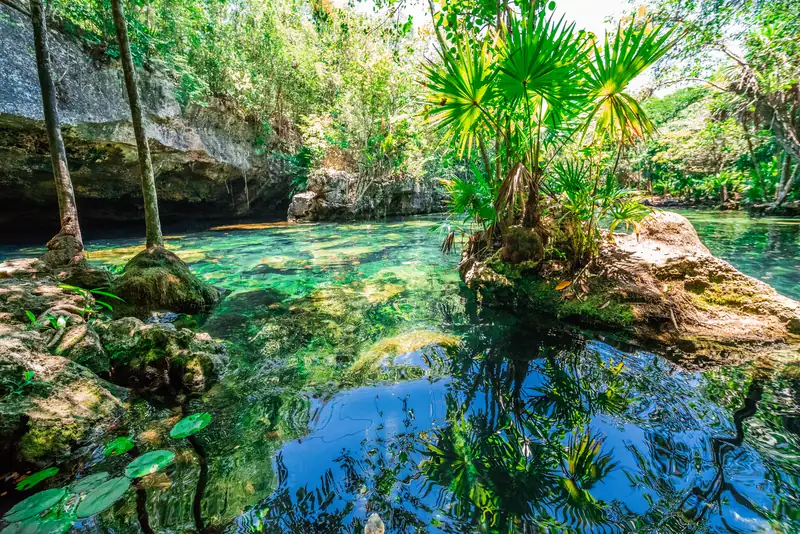
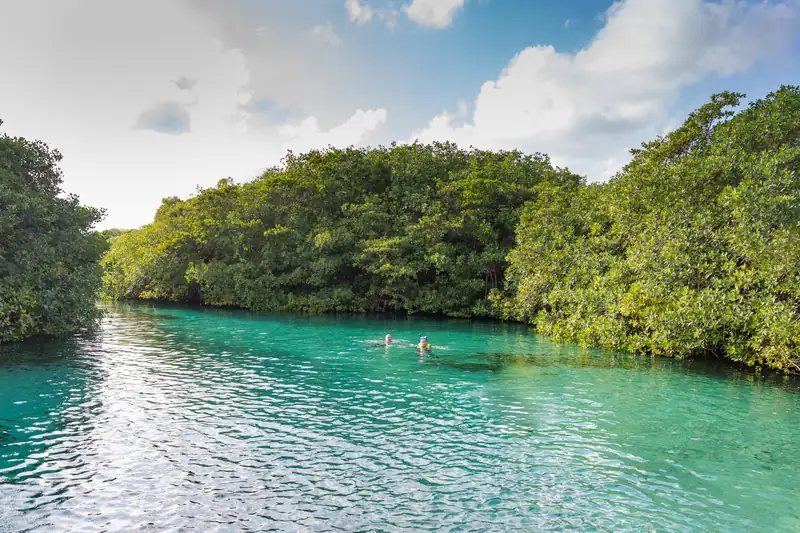
Check our Tulum sargassum guide for the season in detail. On a bad seaweed day, swim in a cenote instead. Cenotes are inland fresh water and are not affected. Casa Cenote is a mangrove-lined channel close to the sea at Tankah, and Cenote Calavera is about 3.3 km from town.
When to go
Sea temperatures average about 26°C in February and 29°C from June to October, according to WeatherSpark’s climate data. The dry season runs roughly from early November to late May, which also misses the worst of the sargassum. Hurricane season is 1 June to 30 November. The best time to visit Tulum guide has the month-by-month picture.
Tulum also holds a Sea Turtle Festival from 15 to 17 October each year, according to INAH.
Snorkelling and turtles
Tulum’s reef sits offshore. A two-hour boat trip from Tulum stops at two reef spots with an in-water guide, looking for turtles and rays, and passes the ruins from the water. It is rated 4.5 from 258 reviews.
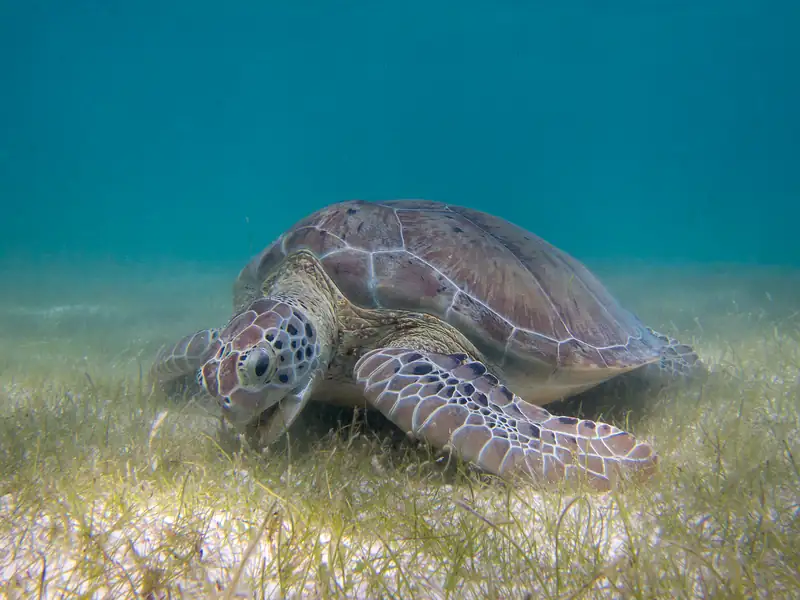
For a calmer bay and a better chance of turtles, go north to Akumal, where green, loggerhead and hawksbill turtles are protected in a federal refuge. The rules there are stricter than on Tulum’s beaches.
If you want flat, clear water without waves, Laguna Kaan Luum is a shallow lagoon about 16 km south-west of town by road.
Beach tips
- Carry cash pesos for park fees, carts and small purchases.
- Pack a sun shirt. At Akumal and at the cenotes, regular sunscreen is restricted or banned.
- Plan the ruins and the northern beaches as one trip, since both sit inside Parque del Jaguar.
For more ideas around the coast, see things to do in Tulum, and for swimming away from the sea, our list of the best cenotes near Tulum. All our sea and cenote tours are on the tours page.