Tulum is in Quintana Roo, which the US State Department rates Level 2, exercise increased caution, in the advisory reissued on 29 May 2026. The UK Foreign Office does not advise against travel there but tells visitors to be very cautious after dark in downtown Tulum, Cancún and Playa del Carmen. Most risks are crime, taxis and the water.
Neither the US nor the UK government advises against travel to Tulum, and both ask visitors to take care. The US State Department rates Quintana Roo, the state Tulum is in, at Level 2, exercise increased caution, the second of its four levels; that rating was unchanged in the Mexico advisory reissued on 29 May 2026, as reported in June 2026. The UK Foreign Office, in advice updated on 20 October 2026, does not advise against travel to Quintana Roo, but tells visitors to be very cautious after dark in downtown Tulum, Cancún and Playa del Carmen.
This page sets out what those advisories say, with dates, and the practical precautions that follow from them and from local reporting. It does not try to rate Tulum beyond what the sources say.
What the travel advisories say
| Government |
Rating for Quintana Roo |
Date |
Key points |
| US State Department |
Level 2: exercise increased caution |
Advisory reissued 29 May 2026 (as reported; still Level 2 in August 2026 reporting) |
Crime; increased caution after dark in downtown Cancún, Tulum and Playa del Carmen |
| UK Foreign Office (FCDO) |
Not among the areas it advises against |
Page updated 20 October 2026, checked 27 October 2026 |
Be very cautious after dark downtown; crime in tourist resort areas; drink spiking; use authorised taxis |
US State Department
The US rates each Mexican state separately on a four-level scale. Quintana Roo, which covers Cancún, Playa del Carmen, Tulum and Cozumel, is at Level 2, exercise increased caution. The national advisory was reissued on 29 May 2026 with no change for Quintana Roo, according to a June 2026 report, and travel press still gave Level 2 in August 2026. The US Embassy’s earlier wording for the state was to exercise increased caution due to crime, with no travel restrictions on US government employees there. US guidance tells its own staff to use extra situational awareness after dark in downtown Cancún, Tulum and Playa del Carmen.
We could not load the State Department’s Mexico page directly in October 2026 (it blocked automated checks), so the details above come from press reports. Read the current text at travel.state.gov before you go.
UK Foreign Office
The FCDO’s Mexico page was last updated on 20 October 2026 and confirmed current on 27 October 2026. Quintana Roo is not on its list of places it advises against. Its safety section says crime is a risk to foreign nationals, particularly in major cities and tourist resort areas, that rival criminal gangs have clashed in popular Cancún tourist destinations and surrounding areas, and that sexual offences have been reported in tourist areas. Its advice for this coast is direct: “Be very cautious after dark in downtown areas of Cancun, Tulum and Playa del Carmen,” and stay in well-lit pedestrian streets and tourist zones. Read it at gov.uk.
If you are from another country, check your own government’s advice. Travel insurance can depend on it.
Practical precautions in Tulum
These follow from the advisories and from local reporting in 2026.
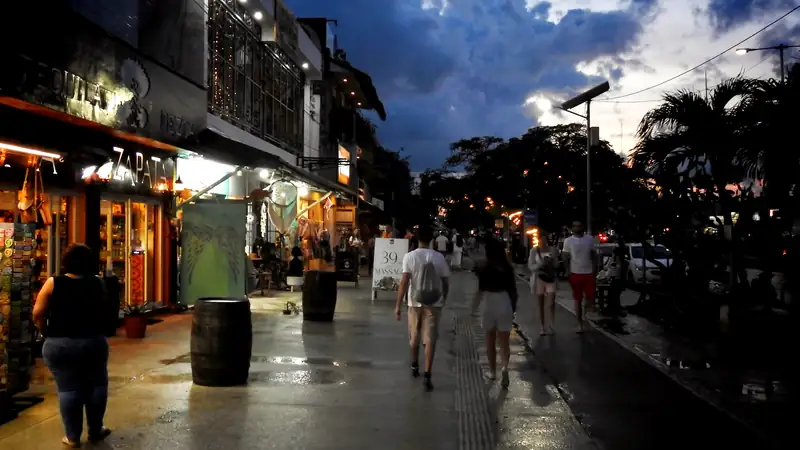
After dark. Stay on busy, lit streets in town, and take a taxi your hotel or restaurant calls rather than walking back along dark roads. Both governments single out downtown areas at night.
Drinks. The FCDO says criminals have robbed or assaulted travellers after drugging them. Do not leave a drink unattended.
Taxis. Tulum has no authorised taxi tariff in 2026. A taxi union posted its own rates in September 2026, which the state mobility institute said were not authorised, and the institute cited a 2 km coastal ride charged at 800 MXN. Agree the fare in pesos before you get in. The FCDO advises sitio taxis from authorised ranks, or asking your hotel, and only authorised pre-paid taxis at airports. More in getting around Tulum.
Cash and ATMs. The FCDO warns that express kidnapping, where victims are forced to withdraw cash, can happen, particularly in urban areas. Use ATMs inside banks or shops in daylight and carry only what you need. Cenote gates mostly take cash pesos, so plan withdrawals; see cenote entrance fees.
Cars. A 2026 travel guide reports occasional window-smashing in car parks at the ruins and cenotes; we found no police figures. Leave nothing visible. Riviera Maya News has also reported a tourist’s complaint of police extortion and a gas-station scam, and warned about unregulated rental agencies; rent from a known company and watch the pump.
VISITAX. Quintana Roo’s visitor tax is paid online. Fake websites have been reported, so pay only at visitax.gob.mx.
Safety in the cenotes
The water carries its own risks, and they are more within your control:
- Life jackets are compulsory at Gran Cenote and Dos Ojos, and guides say children under 12 must wear one.
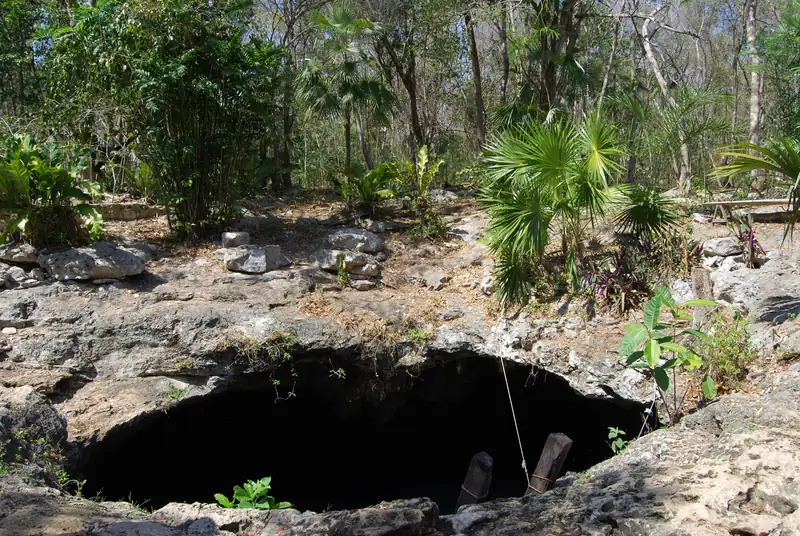
- Stay in the marked areas. Never swim past the line into cave passages. Cave diving without training kills; see cenote diving in Tulum.
- Deep water. Cenote Calavera is a jump into deep water and not for weak swimmers or small children.
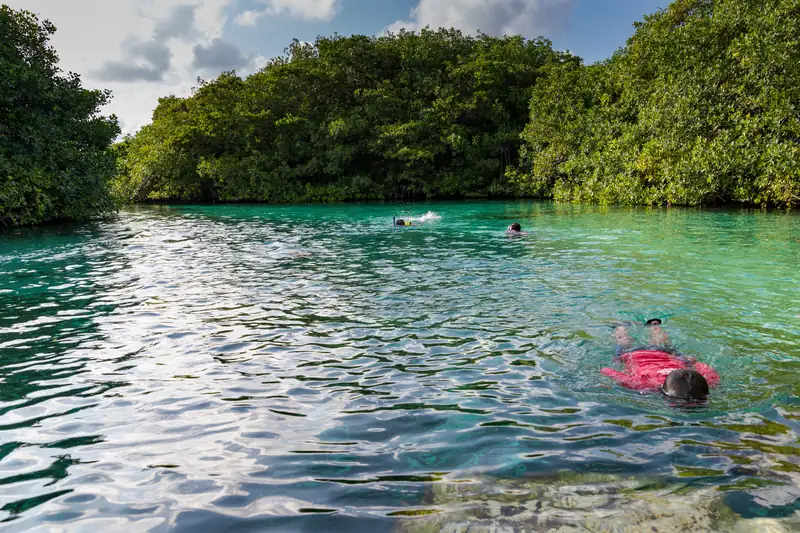
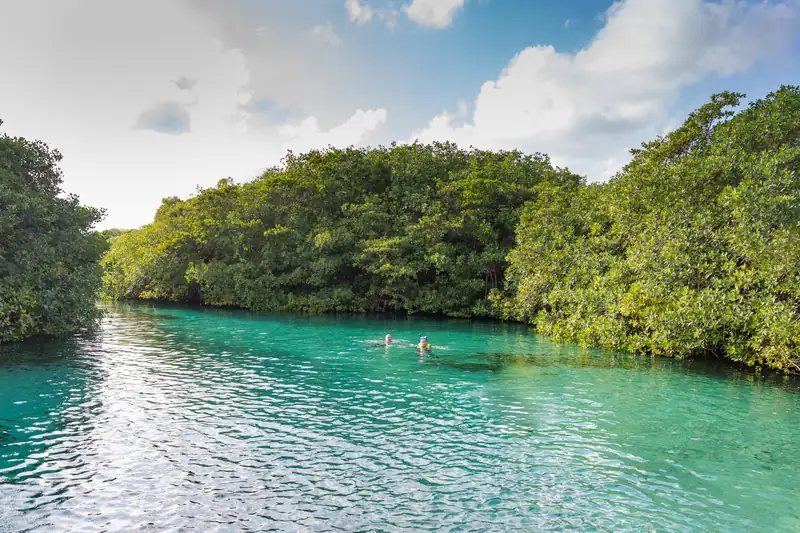
- Crocodiles. A resident crocodile at Casa Cenote bit a visitor on 12 May 2026 after visitors had thrown stones at it. Tulum’s environment department talked of signs and possible swimming limits; we found no final rule by October 2026. Keep your distance and do not feed or provoke it.
Our cenote swimming guide has the full rules.
Weather and the sea
The Atlantic hurricane season runs from 1 June to 30 November, peaking around 10 September (NOAA). If you travel then, buy insurance that covers weather and follow the forecasts. Sargassum seaweed can also foul the beaches from about April to October; rotting piles release gases that can bother people with asthma. See best time to visit Tulum and Tulum sargassum.
The short answer
Both advisories ask for increased caution, with particular care downtown after dark, with taxis and with drinks. Check both governments’ pages in the week you travel, since they change, and plan cenote days in daylight. If you would rather not drive or negotiate taxis, the tours on our tours page with pickup in Tulum take care of transport.